
Transcription turns speech into written text in the same language. Translation takes spoken or written content and expresses its meaning in another language.
For example, turning an English interview into an English document is transcription. Turning that document into Spanish is translation.
This article uses these terms in the context of speech, audio and language services—not biological transcription and translation.
Transcription Changes the Format; Translation Changes the Language
The easiest way to remember the difference is to look at what changes.
With transcription, the language usually stays the same while the format changes. Spoken English becomes written English. With translation, the language changes. English text becomes Spanish text, or a Chinese conversation is conveyed in English.
|
Transcription |
Translation |
|
|
Starting point |
Speech or recorded audio |
Spoken or written content |
|
Result |
Written text |
Content in another language |
|
Does the language change? |
Usually no |
Yes |
|
Common uses |
Meetings, interviews, lectures and voice notes |
Travel, international business, documents and multilingual communication |
|
Main concern |
Capturing the words accurately |
Preserving the meaning and tone |
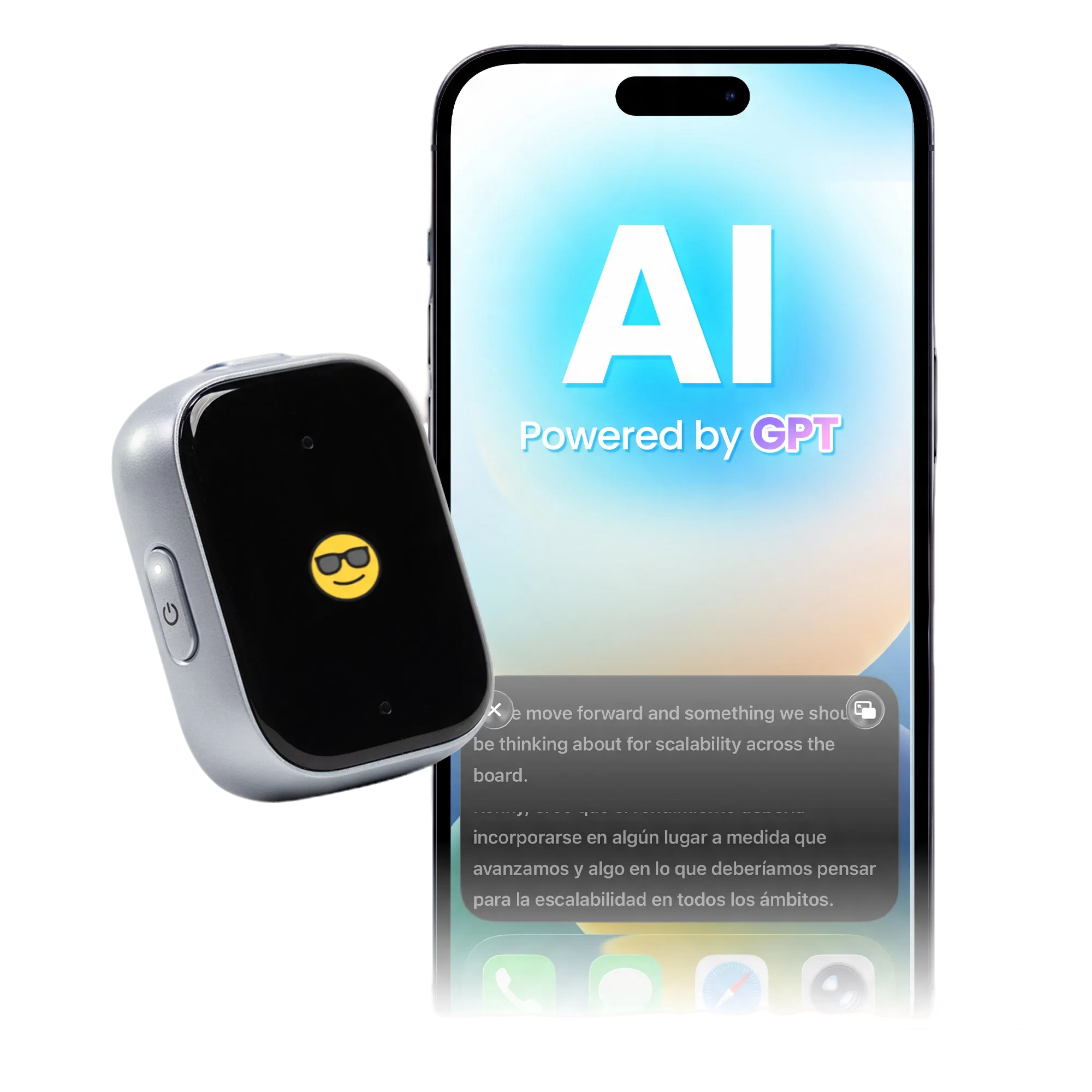
The distinction sounds simple, but modern tools sometimes perform both tasks in one workflow. A device may first recognize speech, turn it into text and then translate that text into another language. The user sees a translation, but transcription is still happening in the background.
Which One Do You Need?
Meetings, Interviews and Voice Notes
Use transcription when you need a written record of something that was said.
A meeting transcript makes it easier to search for decisions, names and deadlines without replaying the entire recording. An interview transcript helps a journalist find quotes. A student can use a lecture transcript to review a topic later. Dictated ideas can also be turned into text instead of being typed manually.
The language does not need to change in any of these examples. The goal is to make spoken information easier to read, search and organize.
A dedicated recorder can help when meetings are long or take place in rooms where a phone may not capture every speaker clearly. The iFLYTEK Smart Recorder, for example, combines voice recording with offline transcription, which can be useful when the internet is unavailable or the conversation should not depend on cloud processing.
A transcript is still not the same as finished meeting minutes. It records what people said, while meeting minutes select the decisions, responsibilities and next steps that matter. This guide explains how to turn an audio recording into clear meeting minutes.
Multilingual Conversations and Documents
Use translation when the audience needs the content in another language.
A company may translate an English contract into French. A traveler may translate a question from English into Japanese. An international team may need to understand a presentation delivered in a language that some participants do not speak.
Translation is not simply a matter of replacing one word with another. The translator—or the software—must account for grammar, context, tone and expressions that may not have a direct equivalent.
Live conversation adds another layer. People cannot wait several minutes for each sentence to be processed, so speed and clarity matter alongside accuracy. This is where dedicated voice translation devices can be more practical than copying text between apps.
For hands-free conversations, calls and international meetings, products such as the iFLYTEK AI Translation Earbuds can provide spoken translation and bilingual text while the conversation is taking place.
Subtitles and International Content
Subtitles may involve transcription, translation or both.
If an English video receives English subtitles, the spoken audio is being transcribed. If those subtitles are then produced in Spanish, the English transcript is being translated. A multilingual video project will often follow both steps:
English audio → English transcript → Spanish subtitles
This order gives the editor a source-language transcript that can be checked before translation begins. It also makes it easier to reuse the same transcript for several languages.
Captions include more than dialogue. They may also identify speakers and describe meaningful sounds such as music, applause or a door closing. Subtitles usually focus on presenting dialogue to viewers, especially when the language changes.
When Transcription and Translation Work Together
You may need both services when the original content is spoken and the final audience uses another language.
Consider a meeting held in Japanese for an international team. If the company needs a searchable English record, the workflow may look like this:
- Record the Japanese meeting.
- Transcribe the speech into Japanese text.
- Review names, numbers and technical terms.
- Translate the corrected transcript into English.
- Turn the translated text into a summary or meeting minutes.
Transcribing first creates a source record. If a name, figure or technical phrase appears incorrectly in the translation, the reviewer can return to the original transcript and audio to find the problem.
Real-time speech translation compresses these steps so the listener receives the translated meaning while the speaker is still talking. That is useful for live conversations, but it does not remove the need for review when the content affects contracts, medical care, legal decisions or important business commitments.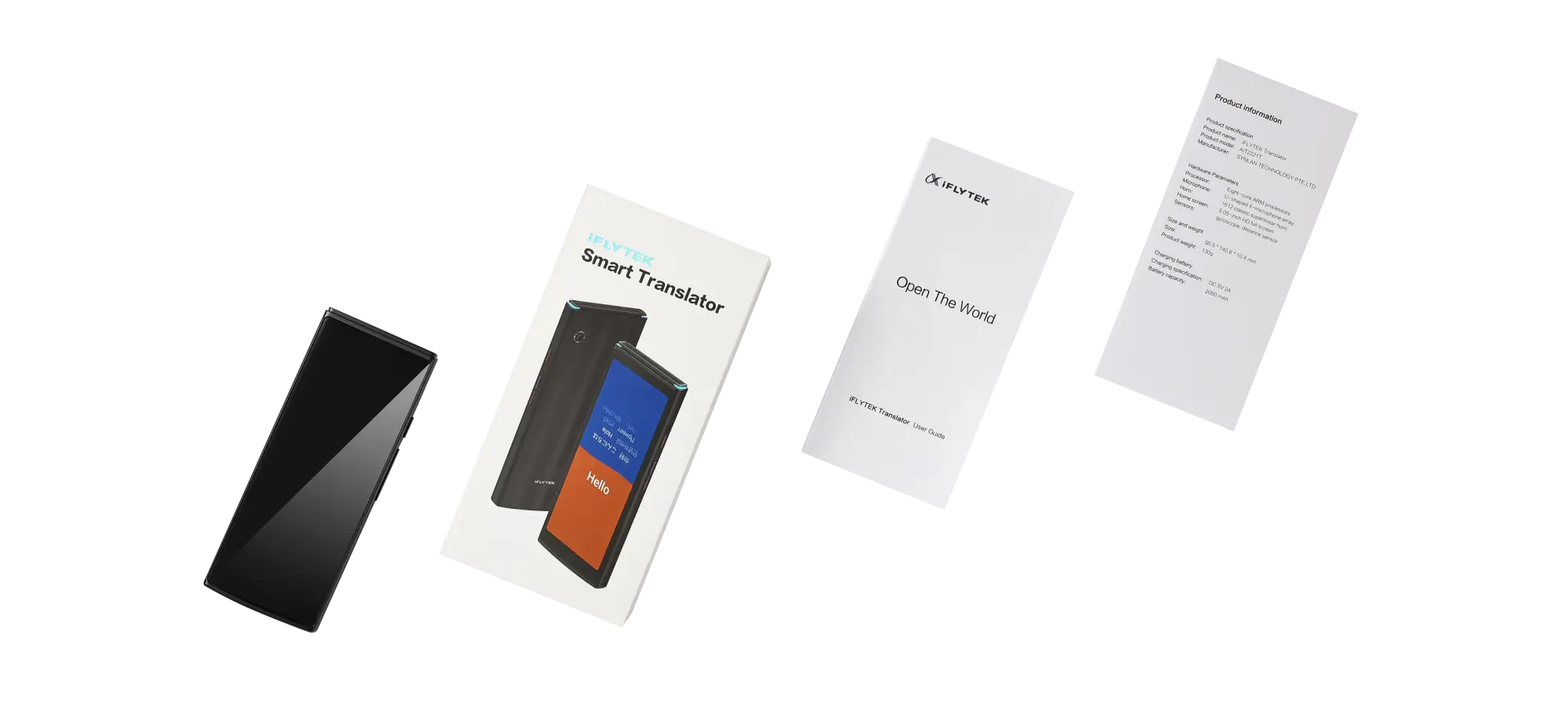
What Can Affect the Final Result?
Clear audio improves both transcription and translation. Background noise, overlapping voices, distance from the microphone and unfamiliar accents can make words harder to recognize. Once an incorrect word enters the transcript, the translation may carry that error forward.
Names, numbers and industry terms deserve special attention. A system may understand an ordinary sentence correctly but mishear a product name, medical term or abbreviation it has not encountered before.
Translation introduces a different set of risks. A sentence may be grammatically correct while missing the speaker’s tone or intended meaning. Humor, idioms and culturally specific references rarely move cleanly from one language to another.
The right level of review depends on the situation. Automatic tools are often sufficient for personal notes, routine meetings and casual conversations. Important public, legal, medical or financial content should be checked by someone who understands the subject and both languages.
Machine translation quality also varies by language pair and context. Our article on how accurate Google Translate is looks more closely at where automated translation works well and where errors are more likely.
FAQ
Is Transcription the Same as Translation?
No. Transcription converts speech into written text, usually without changing the language. Translation expresses spoken or written content in another language.
If someone speaks English and the result is an English document, that is transcription. If the result is a French document, translation is also involved.
Can You Transcribe and Translate at the Same Time?
Yes. Real-time language tools can recognize speech, create text and translate the content while the person is speaking.
However, simultaneous processing leaves less time to check unclear speech, names and technical terms. For important material, it is safer to keep the original recording and review the transcript before relying on the translated version.
Are Subtitles Transcription or Translation?
They can be either.
Same-language subtitles are mainly a form of transcription. Subtitles in another language require translation as well. If the video is in English and the subtitles are in German, the usual process is to transcribe the English audio and then translate the transcript into German.
Conclusion
The difference between transcription and translation comes down to what changes.
Transcription changes speech into text while usually keeping the same language. Translation changes the language while preserving the meaning. Meetings, interviews and voice notes often need transcription. International conversations and documents need translation.
Multilingual meetings, videos and subtitles may need both. In those cases, a clear source transcript provides a more reliable starting point for translation and makes the final result easier to check.