
In our globalized world, breaking down language barriers is more important than ever. Google Translate is often the first tool people turn to for instant translation, but how reliable is it?
In this article, we’ll take a close look at how Google Translate works and find the answer to “how accurate is Google Translate?”, then assess its real-world accuracy, and explore smarter alternatives that may better suit your needs in high-stakes communication scenarios.
How Google Translate Works
Google Translate is one of the most widely used online translation tools, but many users don’t fully understand how it actually works. At its core, Google Translate relies on Neural Machine Translation (NMT), which is a sophisticated form of artificial intelligence that processes entire sentences rather than translating word by word.
The system is trained on massive datasets collected from across the internet, including books, news articles, and translated documents. These datasets help Google’s algorithms learn how real humans use language.
In addition to standard text translation, Google Translate supports multiple input formats such as voice, handwriting, and even image-based translation via its camera feature. This versatility makes it convenient for travel, quick communication, and casual browsing.
However, while Google Translate’s AI-powered engine is powerful, it’s still learning. The quality of translation heavily depends on the language pair, sentence complexity, and the context of use, all of which can affect its overall accuracy and usefulness.
Is Google Translate Accurate?
The short answer is: It depends. Google Translate is convenient and continually improving, but its accuracy varies widely depending on the context.
It generally performs well with major world languages, thanks to the abundance of bilingual data that supports its neural machine translation model. However, for less common languages or complex sentence structures, its accuracy often drops.
In professional or sensitive settings, like legal, medical, or business use, Google Translate may produce grammatically correct output that misses nuance or alters tone, leading to misunderstandings.
It also struggles with gender, politeness levels, and regional dialects, especially in languages like Arabic, Japanese, or Korean. Its “best guess” approach may seem confident, but can result in inaccurate translations.
In summary, while great for casual use, Google Translate isn’t always reliable for precise or high-stakes communication.

How Good is Google Translate? Real-Life Accuracy and Effectiveness
For everyday tasks, Google Translate generally does the job. But when it comes to more complex needs, like professional communication or technical content, its performance can be hit or miss.
A 2021 study by UCLA Medical Center found that Google’s neural machine translation preserved meaning in about 82.5% of cases overall. However, accuracy varied widely depending on the language pair, ranging from 55% to 94%.
Google Translate Accuracy by Language
|
Language |
Accuracy Range |
|
Spanish |
90%+ |
|
French |
80–90% |
|
German |
80–90% |
|
Italian |
80–90% |
|
Portuguese |
70–80% |
|
Dutch |
70–80% |
|
Swedish |
70–80% |
|
Norwegian |
60–70% |
|
Danish |
60–70% |
|
Finnish |
60–70% |
|
Czech |
50–60% |
|
Polish |
50–60% |
For non-European or low-resource languages, accuracy declines sharply. A report showed that Google Translate made errors in up to 80% of cases when translating languages such as:
Cebuano, Georgian, Kurdish, Latin, Malaysian, Maori, Nepali, Persian, Punjabi, Urdu, Uzbek.
This is largely due to limited linguistic data for these languages in Google's system. While translations of structured content in common languages (like English or Chinese) tend to be reliable, performance drops to around 72% for informal or user-generated content.
Why Accuracy Matters in Real-Life Communication
While casual users may tolerate minor errors, accurate translation is critical in many real-world contexts where the stakes are much higher. Miscommunication doesn’t just create confusion, it can have serious consequences.
- Business Misunderstandings: In negotiations, misinterpreted terms could result in lost deals or legal issues.
- Travel Troubles: Wrong translations of directions, food allergies, or local customs can impact safety.
- Education Challenges: Students relying on inaccurate translations may misunderstand key academic concepts.
- Healthcare Risks: Miscommunication in medical settings could be life-threatening.
That’s why professional, high-accuracy translation solutions are essential for serious users.
Best Alternative to Google Translate - iFLYTEK Smart Translator
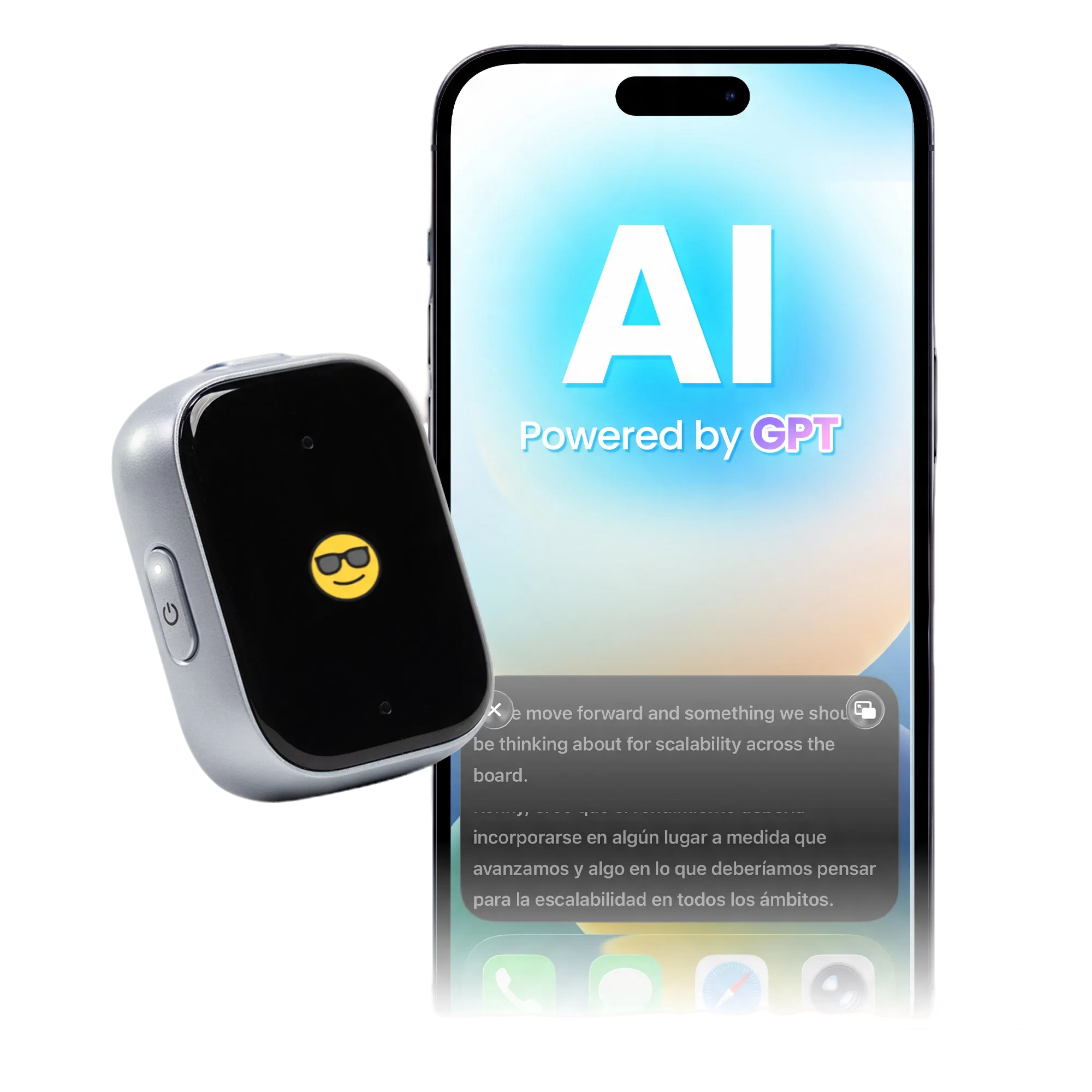
If translation accuracy is your top priority, especially in professional or high-stakes scenarios, the iFLYTEK Smart Translator stands out as a superior alternative to Google Translate.
Backed by 25 years of AI research and linguistic innovation, it delivers real-time translations with a level of precision and contextual understanding that free tools often struggle to match.
Unlike Google Translate, which relies on cloud-based neural networks and often produces “best guess” translations, iFLYTEK leverages its dedicated translation engine to provide more accurate, context-aware results even when offline, with an impressive accuracy rate of up to 98%.
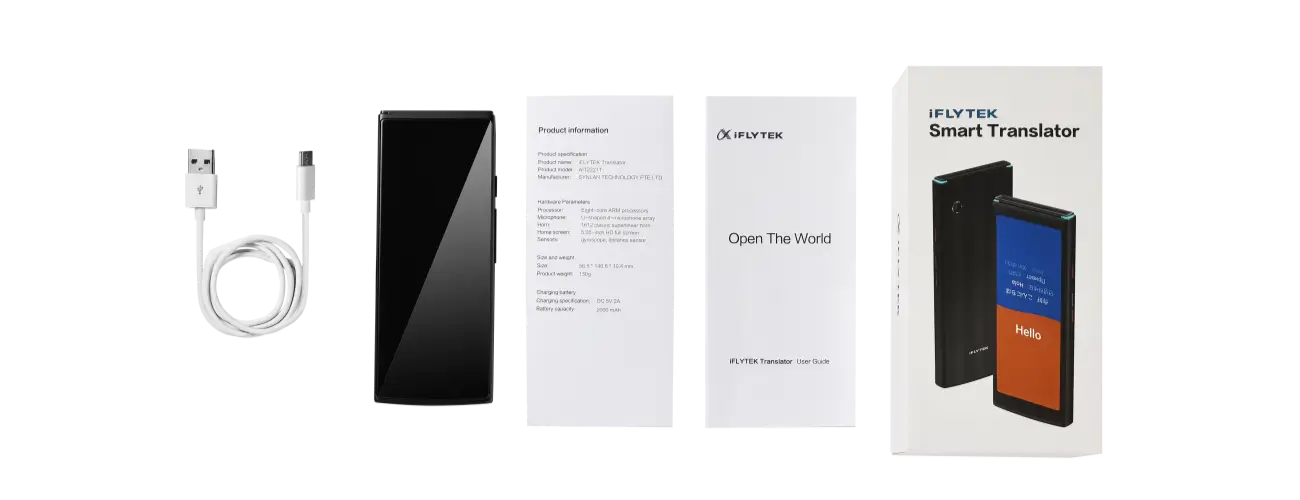
Why iFLYTEK Excels in Accuracy:
AI-Powered Real-Time Translations: iFLYTEK’s proprietary AI models are trained to deliver highly natural and fluent translations, adapting to the tone and intent of your speech, not just the words.
Reliable in Noisy or Complex Environments: Thanks to advanced noise cancellation and a Hi-Fi speaker system, spoken translations remain clear and accurate, even in crowded spaces or busy streets.
Supports 60 Languages with Cultural Sensitivity: Unlike many online tools that ignore dialectal differences or honorifics, iFLYTEK recognizes regional nuances, especially in languages like Japanese, Arabic, and Korean where tone and formality matter.
Offline Mode for Critical Moments: No internet? No problem. iFLYTEK maintains high accuracy in offline mode, making it ideal for travel, fieldwork, or remote locations where connectivity is limited.
Instant OCR Camera Translation: Need to translate signs, labels, or menus on the spot? iFLYTEK’s built-in OCR engine provides instant, accurate translations of printed text in up to 50 languages, no photo upload needed.
iFLYTEK Translator vs. Google Translate
While Google Translate is widely used for its convenience, it has notable limitations when it comes to real-time conversations, offline use, and contextual accuracy. In contrast, the iFLYTEK Smart Translator is specifically designed to offer professional-grade translations that go far beyond what an app can deliver.
Here’s how they compare:
|
Feature |
Google Translate |
iFLYTEK Smart Translator |
|
Accuracy |
Varies by language and context; struggles with nuances and regional dialects |
AI-powered precision with 25 years of experience; optimized for natural and context-aware translation |
|
Languages Supported |
100+ (app-based) |
60 major global languages, with highly optimized bilingual pairs |
|
Offline Capability |
Limited offline translations, often lacking in accuracy |
Full offline translation for multiple languages, ideal for travel or remote use |
|
Real-Time Face-to-Face Translation |
Requires typing or voice input via phone, often with delays |
Instant, two-way, real-time conversations using built-in microphones and speakers |
|
Image (OCR) Translation |
Basic image recognition; performance varies |
Advanced OCR technology with support for 50 languages, great for menus, signs, documents |
|
Speed & Usability |
Depends on internet speed and device |
Lightning-fast processing with Octa-core CPU and intuitive interface |
|
Sound Quality |
Depends on phone hardware; not ideal in noisy settings |
Hi-Fi speaker and noise-canceling microphone ensure clarity even in loud environments |
|
Privacy & Data Control |
Cloud-based, often linked to your Google account |
Local storage and export options give you full control over your data |
Tips to Get the Best Translation Results
No matter which translation tool you use, here are a few tips for better accuracy:
To improve translation accuracy, keep your sentences short and straightforward. Complex grammar, idioms, or culturally specific phrases like “spill the beans” can easily confuse translation tools and lead to errors.
When using voice translation, speak clearly and at a steady pace. Devices like the iFLYTEK Smart Translator, with noise-canceling mics and Hi-Fi speakers, perform well even in noisy settings like airports or meetings.
For important content, like business, academic, or medical, it’s best to review the translation and cross-check it for tone and accuracy. And if your needs are critical, relying on a dedicated device like iFLYTEK offers greater reliability, especially offline and in professional scenarios.
Smart usage plus the right tool ensures better, more confident communication across languages.
FAQs
1. Is Google Translate good enough for travel?
Yes, for simple needs. But for real-time conversation and complex situations, a dedicated device like iFLYTEK is more effective.
2. Can iFLYTEK Translator work offline?
Yes! It supports offline translation for major languages and includes powerful local processing.
3. What languages does iFLYTEK support?
Over 60 languages, including English, Japanese, French, Spanish, German, Arabic, Thai, and many more.
4. Is the iFLYTEK Translator hard to use?
Not at all. It’s plug-and-play with a user-friendly interface — perfect for both tech-savvy users and beginners.
Conclusion
Google Translate is a useful free everyday tool, but it has limitations, especially when accuracy is critical. For professional use, travel, or serious communication, iFLYTEK Translator offers unparalleled reliability, real-time interaction, and intelligent translation support.
In addition to Translator, iFLYTEK also offers a voice recorder device and a smart translation pen device, designed to help you capture, convert, and communicate accurately in any environment.
Related articles:
1. what is a speech to speech translation?
2. The Ultimate Guide to Smart Translators
3. How does Device for Language Translation Revolutionize Business Communication?