
Imagine this: You are attending a fast-paced lecture, the professor is rapidly explaining complex knowledge, and you're hurriedly taking notes. After one class, your handwriting is unclear, and you've missed key points. Sound familiar? Most students have been there, struggling to choose between listening and taking notes. But what if you didn’t have to? Recording tools are changing how students learn, but with so many options, choosing the right tool has become a challenge.
In this guide, we’ll compare voice recorders with smartphones, reveal why voice recorders are getting popular among students, and help you choose the best way to never miss a word again.
Why Recording Tools Matter for Students?
For most students, capturing every word in class is impossible through handwritten notes alone. Rapid speech, foreign languages, and complex topics may make it difficult to take notes. That’s why recording tools are essential:
Accuracy: Their accuracy is far higher than your hurried and messy notes.
Efficiency: With recording tools, your efficiency in listening to classes will greatly improve. You will focus on understanding concepts during class rather than struggling to take notes.
Review Support:They are convenient for checking details, organizing logic, and accurately positioning the key points from classes.
Is a Voice Recorder Better Than a Smartphone for Recording?
Smartphones are convenient. They’re always in your pocket, and most come with a built-in recording app. But convenience doesn’t always equal quality. For serious academic use, the limitations of smartphones, like lower-quality mics, shorter battery life, and storage limitations, often become noticeable. Dedicated voice recorders are designed for one main purpose: capturing clear and detailed audio in various environments.
Voice Recorder Strengths:
- Superior microphone quality.
- Longer battery life for extended recording sessions.
- Noise reduction technology for clearer playback.
Smartphone Strengths:
- Multifunctional device
- Easy sharing and syncing with cloud storage.
- Integrated into daily life.
Feature-by-Feature Comparison: Voice Recorder vs Smartphone
From this comparison, dedicated recorders clearly excel in areas that matter most to students who record frequently.
|
Feature |
Voice Recorder |
Smartphone |
|
Audio Quality |
High-definition microphones, optimized for voices. |
Average quality; background noise is often captured. |
|
Battery Life |
Up to 30+ hours of continuous recording. |
Typically, 3–6 hours of continuous recording. |
|
Storage |
Dedicated internal storage plus microSD expansion. |
Limited by the phone’s available memory. |
|
Portability |
Compact and lightweight. |
Always on hand, but bulkier if using accessories. |
|
Noise Reduction |
Advanced multi-mic noise cancellation. |
Basic noise filtering. |
|
Ease of Use |
One-touch recording |
Requires opening an app, and starting the recording. |
|
Durability |
Long-term recording use. |
Not specialized for heavy audio capture; more prone to overheating. |
Why Many Students Choose the iFLYTEK Smart Recorder?
For students who demand more than just “good enough” recordings, the iFLYTEK Smart Recorder stands out as a tool designed for academic life. It can not only capture sound intelligently but also adapt to different environments and transform spoken words into organized study materials with remarkable accuracy. When you’re even seated at the back of a crowded lecture hall, its combination of advanced microphones, powerful AI, and smart editing tools ensures you never miss a crucial detail. The iFLYTEK Smart Recorder is a powerful helper in the student community for several reasons:
Professional-Grade Recording
It’s a directional microphone that captures voices up to 10 meters away, plus 2 omnidirectional microphones. It uses AI noise reduction to deliver clear human voices even in large, echo-prone lecture halls.
Offline Transcription Support
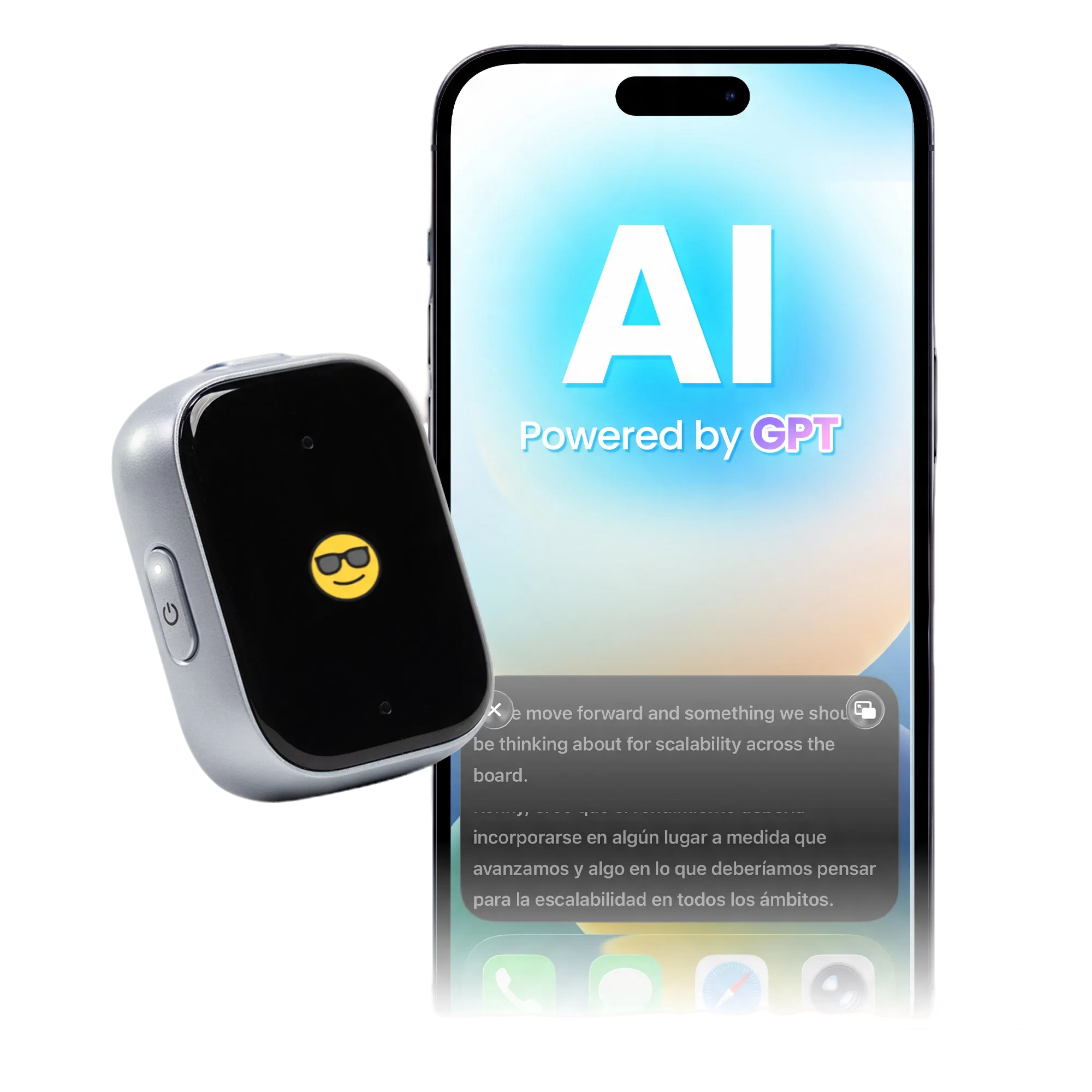
Even offline, the recorder can transcribe speech into text during recording, saving the transcript instantly once the lecture ends. It supports offline transcription in multiple languages. So it’s necessary for bilingual classes or international seminars.
AI-Powered Editing Tools
The device automatically paragraphs transcripts, making it easier to follow group discussions or panel talks. Students can bookmark key points during recording, filter out excessive words and noise for greater accuracy.
How to Choose the Right Recording Tool for Your Needs
With assignments, lectures, and group projects piling up, students need a recording tool that’s reliable, easy to use and fits their lifestyle. In view of the importance of the right recording tool in enhancing students' learning efficiency, the following aspects must be considered.
Recording Frequency:
You can choose products with different battery lives based on how often you record. If you record daily, a dedicated recorder will serve you better. The iFLYTEK Smart Recorder’s 175-hour recording power can greatly meet daily needs.
Audio Quality Requirements:
For noisy environments, choose a device with advanced noise cancellation.
Budget:
Smartphones are “free” if you already own one, but outstanding recorders like iFLYTEK offer better long-term value.
Extra Features:
Transcription, storage expansion, and sharing options can significantly improve your workflow.
Getting the Most Out of Your iFLYTEK Smart Recorder
Since the iFLYTEK Smart Recorder has such powerful features, maximizing its use is half the battle. Here are some tips to maximize the iFLYTEK Smart Recorder’s benefits:
Position Strategically
Place the recorder on your desk or table, facing the lecturer or speaker. This allows the directional microphones to capture clear audio from the source.
Use Noise Reduction Mode
It is equipped with advanced AI-powered noise reduction, ensuring that you get the clearest audio possible, even in noisy environments like lecture halls or coffee shops.
Regularly Transfer Files:
You should keep storage free for new recordings by backing up to the cloud.
Leverage Transcription:
Edit transcripts after class for fast and accurate notes in case the recordings are not usable.
FAQ
Can I use my smartphone and still get good recordings?
Yes, but quality may drop in noisy rooms or from a distance. A dedicated recorder is better for long lectures.
Is transcription 100% accurate?
No transcription tool is perfect, but iFLYTEK’s AI achieves high accuracy, especially for clear voices.
Does the iFLYTEK Smart Recorder have AI voice recognition?
Yes. The AI also enhances voice clarity by filtering out background noise, ensuring that the recorded speech is captured with exceptional precision, even in noisy environments.
Conclusion
Both smartphones and voice recorders have their place in a student’s toolkit. For casual recording, your phone is fine. But if you want consistent, high-quality audio, long battery life, and advanced transcription features, a dedicated voice recorder like the iFLYTEK Smart Recorder is the smarter choice. In an academic setting where every detail matters, investing in the right recording tool can make the difference between “just getting by” and truly excelling.
Read more:
Best Translation Scanning Pens of 2025