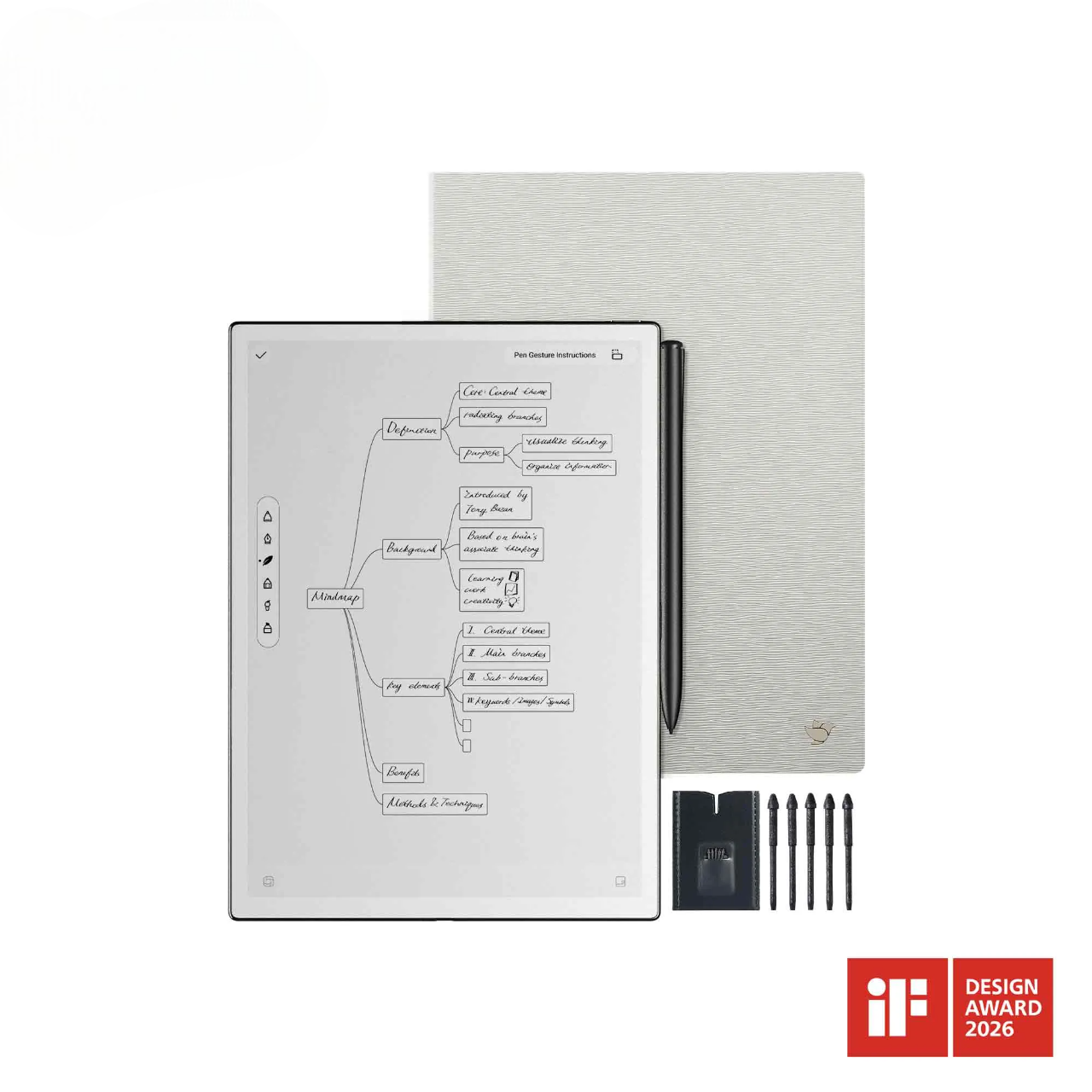

In modern education, one of the most inefficient habits is linear note-taking—trying to record everything in the order it is heard. Whether in lectures, online courses, or self-study sessions, learners often end up with pages of dense notes that are difficult to review and even harder to understand later.
A more advanced approach is emerging: the “listen-and-deconstruct” learning method. Instead of passively copying information, learners actively break down knowledge in real time while it is being delivered. This method becomes significantly more powerful when paired with AI-driven E-Ink systems such as iFLYTEK AINOTE 2, which transform raw input into structured, meaningful learning material.
The Core Idea: Learning While Deconstructing, Not Recording
The “listen-and-deconstruct” method is built on a simple but powerful principle:
You do not write what you hear—you interpret what you hear while listening.
Traditional note-taking focuses on transcription. This method focuses on real-time cognitive processing.
Instead of writing full sentences, learners break information into three layers:
- Structure layer: What is the main idea?
- Logic layer: How does this idea connect to others?
- Detail layer: What examples or explanations support it?
In practice, this means a lecture is no longer recorded as continuous text. It becomes a structured map of thinking.
This approach is especially effective in complex subjects such as economics, law, science, and language learning, where understanding relationships matters more than memorizing sentences.
Why Traditional Note-Taking Fails in Real Learning
Most students rely on writing everything down, assuming completeness equals understanding. However, this creates three problems:
First, attention is split. While writing, learners stop processing meaning and focus only on transcription.
Second, notes become “flat.” Everything looks equally important, making revision inefficient.
Third, cognitive overload increases. During review, students must re-interpret the entire text again.
This is where modern tools such as electronic paper tablet systems become relevant—not because they replace thinking, but because they reduce mechanical effort so thinking can happen in real time.
How “Listen-and-Deconstruct” Works in Practice
The method works best when learning is treated as an active decoding process.
Step 1: Capture the raw input
Instead of writing full sentences, the learner listens and identifies:
- key concepts
- transitions
- cause-effect relationships
Step 2: Break content into structure
Information is immediately categorized:
- Definition
- Principle
- Example
- Exception
Step 3: Rebuild meaning in real time
Rather than copying, the learner reconstructs logic:
“Why is this true?”
“How does this relate to what I already know?”
Step 4: Store only structured knowledge
The final notes are not transcripts, but compressed cognitive maps.
This is where AI systems dramatically enhance the process.
Why AI E-Ink Systems Change This Method Completely
The real limitation of the “listen-and-deconstruct” method is speed. Humans can only process and structure so much information in real time.
This is where iFLYTEK AINOTE 2 becomes significant.
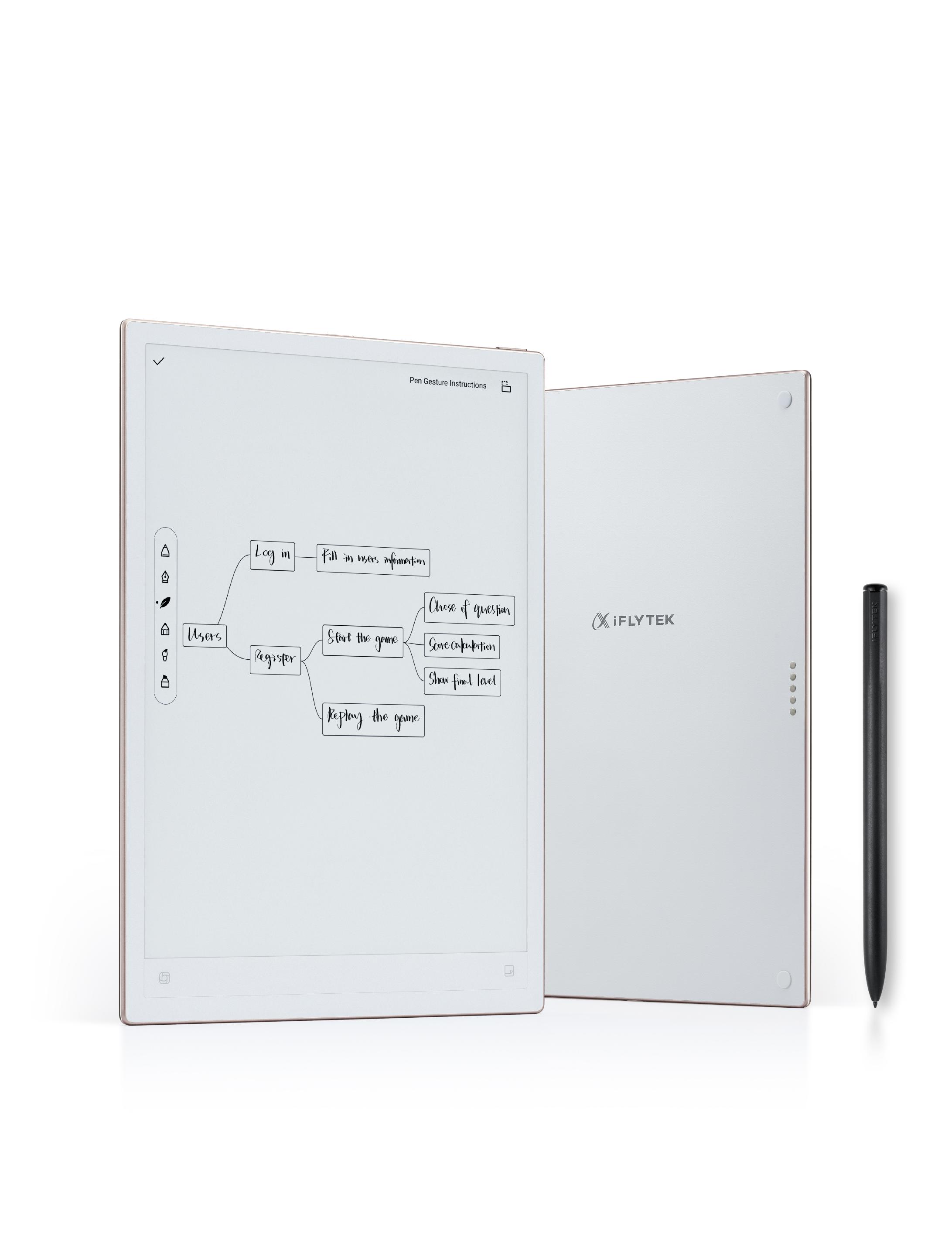
It is not simply an E ink drawing tablet. It acts as an active cognitive assistant that supports the learning process while it happens.
Instead of forcing learners to do everything manually, the device handles the mechanical transformation:
- voice is captured and transcribed
- handwriting is converted into structured text
- content is organized automatically
- key points are extracted for review
This allows the learner to focus entirely on deconstruction and understanding, which is the core of this learning method.
The Role of AI Note Systems in Real-Time Thinking
In the context of modern learning, tools like AINOTE 2 systems are evolving into cognitive support platforms rather than simple writing surfaces.
With iFLYTEK AINOTE 2, learners can:
- listen without worrying about missing details
- annotate ideas in real time
- reorganize concepts instantly
- revisit structured summaries later
This changes the learning experience fundamentally. Instead of “writing notes during class,” the learner is “thinking during class while the system records structure.”
The result is a shift from memory-heavy learning to logic-heavy learning.
Why E-Ink Matters in Cognitive Learning Systems
The physical design of E-Ink devices plays a critical role in this method.
Unlike traditional tablets, an electronic paper tablet reduces visual distraction. There are no notifications, no color overload, and no competing apps.
This creates a mental environment that supports deep processing.
Devices in this category are often described as:
- e ink paper tablet
- tablet ink paper
- electronic paper tablet
- e ink tablet for structured writing
Their value is not in entertainment or multitasking, but in sustained cognitive engagement.
When combined with AI structure tools, they become ideal for deconstructive learning.
Global Use Context: From Japan to Southeast Asia
The adoption of AI learning devices is not limited to one region. Interest in systems reflects a broader shift toward multilingual and cross-border learning tools.
In multilingual environments, listen-and-deconstruct learning becomes even more valuable because learners must process:
- unfamiliar vocabulary
- new sentence structures
- conceptual differences across languages
Here, AI-assisted transcription and structure generation reduce friction, allowing learners to focus on meaning instead of translation mechanics.
Similarly, cloud-based systems like AINOTE mail (used as a conceptual extension of AI note synchronization workflows) represent the direction of learning mobility—where notes are no longer tied to a single device, but accessible across environments.
Why AINOTE 2 Fits the Listen-and-Deconstruct Method
The strength of iFLYTEK AINOTE 2 lies in its ability to align with the cognitive rhythm of this learning method.
It supports structured capture rather than raw transcription, which is exactly what deconstructive learning requires.
Key alignment points
- It reduces the need for full manual note-taking
- It allows learners to focus on identifying logic structures
- It converts mixed input (speech + handwriting) into unified knowledge
- It supports review through structured summaries rather than raw text
In this sense, it functions less like a traditional E ink drawing tablet, and more like a learning structure engine built on top of an electronic paper interface.

From Passive Writing to Active Thinking
The most important shift introduced by the listen-and-deconstruct method is psychological.
Instead of thinking:
“I must write everything down.”
Learners begin to think:
“I must understand what matters while I listen.”
This change may seem subtle, but it fundamentally alters learning outcomes.
Writing becomes secondary. Understanding becomes primary. Structure becomes the final goal.
This is why devices like tablet ink paper systems are increasingly associated not with productivity, but with cognition.
Conclusion: Learning as Structured Perception
The “listen-and-deconstruct” learning method represents a shift from recording knowledge to actively shaping it during acquisition.
It works best when supported by AI systems that handle transcription, organization, and summarization in real time. In this environment, learners no longer struggle to keep up with information flow. Instead, they learn to shape it as it arrives.
With platforms like AINOTE 2 from iFLYTEK, this method becomes practical at scale. The device does not replace thinking—it removes friction so thinking can happen continuously.
As e-ink technology evolves—from E ink paper tablet to intelligent electronic paper tablet systems—the boundary between listening, writing, and understanding continues to fade.
What remains is the core of learning itself: not copying information, but making sense of it in real time.