Learning a new language is not only a matter of cramming new words, but rather changing the manner in which you think and speak. Every language poses its difficulties, whether it be a different writing system, its new sounds, or its hard grammar rules. English speakers may particularly find some languages intimidating because of the difference in what they are used to.
In this guide, you will discover why some languages are more difficult than others, discuss the top 10 hardest languages to learn, and find some useful tips on how to choose a language and learn it. We will also come across an advanced instrument, iFLYTEK Smart Dictionary Pen, which will speed up and make you intelligent in learning a new language.
What Makes a Language Hardest to Learn?
There are certain languages that are more difficult to learn since they have nothing in common with English in construction, pronunciation, or writing system, alphabet, or grammar. Specific writing scripts/tones, unknown phonetics, compound verb constructions, and limited instruction materials complicate it even further.
What counts is the extent to which the language is similar to English. Familiar formats of alphabet and grammatical language are easy. However, when the grammar, sounds, and writing are largely different, it is a bigger challenge.
Top 10 Hardest Languages to Learn for English Speakers
Learning a new language is never easy, but for English speakers, some languages present a particularly steep learning curve due to major differences in grammar, pronunciation, writing systems, and cultural context. Below are the top 10 hardest languages to learn for native English speakers, each one requiring long-term dedication, consistent practice, and often immersion to truly master.

1.Mandarin Chinese
With four tones (five if you count the neutral tone), thousands of unique characters instead of an alphabet, and almost no shared vocabulary with English, Mandarin is widely considered the most difficult language. Learners also face the challenge of mastering Chinese sentence structures and navigating subtle contextual meanings.
2. Arabic
Arabic uses a non-Latin script written from right to left, includes complex grammatical rules, and has numerous dialects that differ drastically across regions. What you learn in Modern Standard Arabic might not be understood in everyday conversations in Egypt, Lebanon, or Morocco.
3. Japanese
Japanese features three separate writing systems—hiragana, katakana, and kanji (borrowed from Chinese)—each used in different contexts. Its grammar is highly formal, with multiple levels of politeness and indirectness, making it hard for English speakers to use naturally.
4. Korean
While Hangul, the Korean alphabet, is relatively easy to learn, Korean grammar is a different story. Sentence structures are reversed compared to English, and its extensive system of honorifics, verb conjugations, and subtle contextual expressions can be overwhelming.
5. Hungarian
This language includes 18 grammatical cases, a rarity among world languages. Hungarian is also agglutinative, meaning words are formed by stringing together many small parts, and its vocabulary is unrelated to any major language family most English speakers know.
6. Finnish
Another agglutinative language, Finnish boasts 15 noun cases and an extremely flexible word order that can make even simple sentences complex. The vocabulary is unfamiliar and requires a major mental shift from Indo-European languages.
7. Polish
Polish grammar features seven noun cases and a challenging system of gender and agreement. But perhaps its most infamous hurdle is pronunciation—consonant clusters like “szcz” or “rz” can trip up even the most determined learner.
8. Navajo
This Native American language is primarily verb-based, with highly detailed verb forms that encode information about the subject, object, direction, and even intensity. Its grammar and logic are fundamentally different from English, and there are few modern learning resources available.
9. Icelandic
Icelandic has preserved many archaic features of Old Norse, including complicated inflectional endings and ancient vocabulary. Although it's spoken in a small country, mastering it requires learning grammar that hasn’t changed much in over a thousand years.
10. Cantonese
Unlike Mandarin, which has four tones, Cantonese has six to nine tones depending on the dialect. It also lacks widespread global support in language learning platforms and educational resources, making it harder for learners to find practice material or immersion opportunities.
These languages need to be treated with a lot of commitment if you come from English. They require learning totally different systems of pronunciation, grammar, or writing systems.
What Are the Hardest Languages to Learn?
Now, let us put things in perspective. Such examples as Spanish, Dutch, or even Italian are viewed by English speakers as comparatively easy because of the more or less similar alphabets, resemblance in vocabulary, and similarities in grammatical structure. Such cases of overlap in languages reduce the learning challenge to climb the learning curve.
On the contrary, the most difficult languages tend to involve having to master brand new systems, new scripts, tones, or sentence types. Such languages as Turkish or Hindi, which do not get into the top 10, can also be rather challenging, because of their agglutinative (or even complex writing). These problems are more or less invested in your learning background and intentions.
How to Choose the Right Language for You
The choice of a difficult language to learn is determined by various factors. First, you should think about your motivation: is it cultural interest, a trip, or business reasons? Next, evaluate the resources and the time at your disposal. There are languages that just stagnate, and there are languages that pay off when it comes to complete immersion.
It also depends on your learning style. Character languages can be difficult when you are a visual learner. Languages with patterns may be more appealing to you in case you prefer logic. When choosing a language, select the one that suits your purpose and keeps you entertained.
Tips for Learning Any Language Faster
It does not necessarily have to take forever to master a new language, particularly when you develop proper habits. These are some of the best strategies for improving your progress:
Listen to native-level content daily: Podcasts, music, movies, or news help you absorb pronunciation, intonation, and rhythm naturally.
Use spaced repetition systems (SRS): Flashcard apps like Anki or Quizlet help lock in vocabulary and grammar rules efficiently.
Start speaking early: Don’t wait to be fluent to talk. Even broken sentences help build fluency and confidence over time.
Immerse yourself: Read books, follow social media accounts in your target language, and engage with native speakers when possible.
Be consistent and realistic: 15–30 minutes a day is better than 2 hours once a week. Consistency builds long-term retention.
Maintain a combination of structured grammar and real-life interaction in order to make things dynamic and fun!
Boost Your Language Learning with Smart Tech
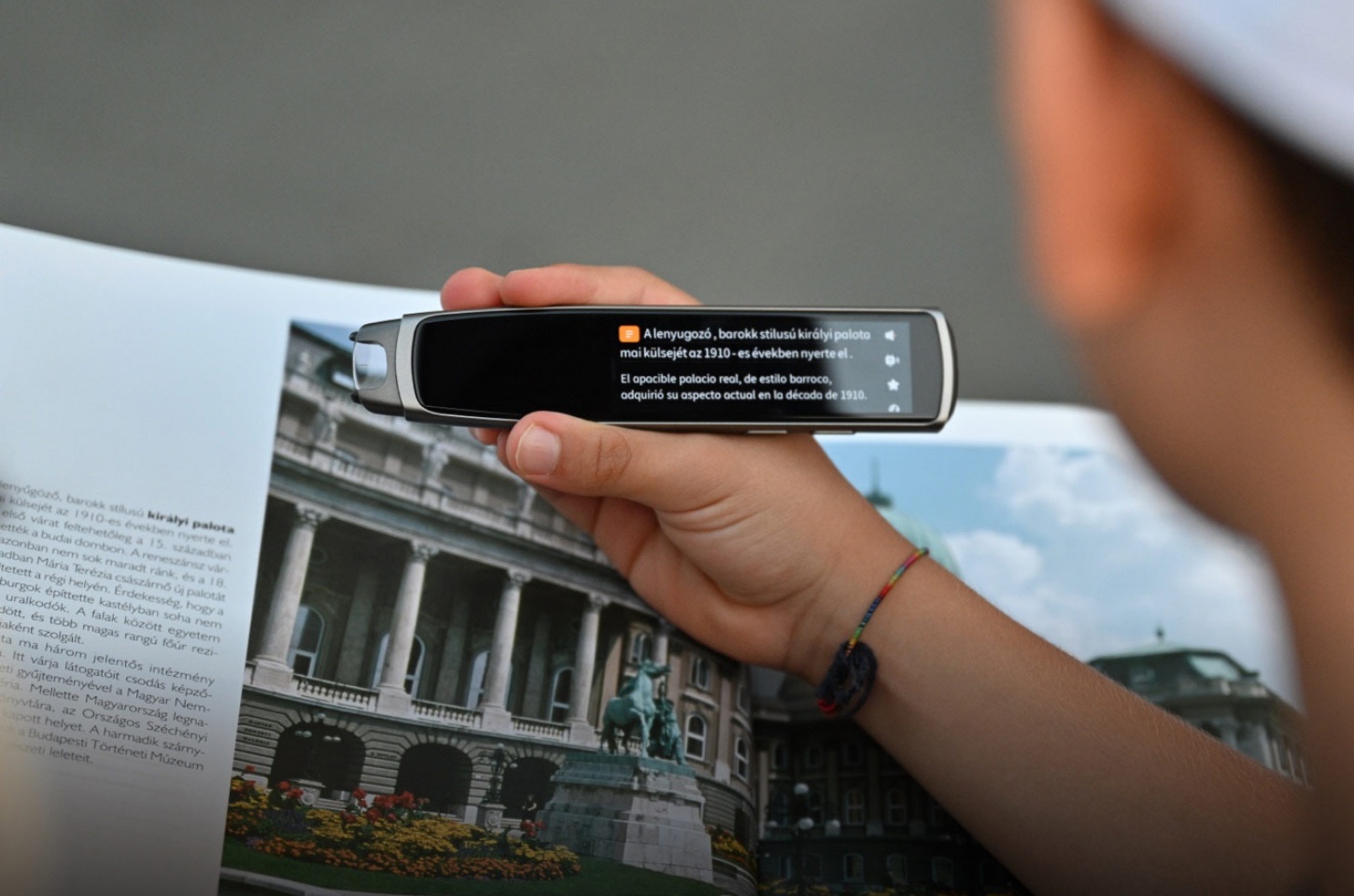
Mastering one of the world’s top 10 hardest languages is no small feat, but you don’t have to do it alone. The iFLYTEK Smart Dictionary Pen is a compact, powerful tool designed to make language learning smoother, faster, and more intuitive.

Whether you’re flipping through a dense Japanese textbook, deciphering Arabic script, or parsing Hungarian grammar, this pen-like translator can instantly scan, recognize, and explain foreign words, idioms, and even full sentences without disrupting your learning flow.
Why It’s a Game-Changer for Language Learners:
-
Translation in 21 Languages
Instantly translate between English and a wide range of target languages, including Chinese (Simplified and Traditional), Japanese, Korean, French, German, Hungarian, Spanish, and more. -
Scan and Look-Up Words Instantly
Get quick access up to 15x faster to word pronunciations, definitions, and example sentences. No more flipping through dictionaries or pausing to Google meanings. -
Offline Capability
The pen supports offline English word searches and language assessments, making it perfect for students studying in libraries, on planes, or during tech-free moments. -
Unlimited Scanning
Effortlessly scan textbooks, newspapers, exercise books, and more; it is ideal for daily immersion and building vocabulary contextually. -
Authoritative Dictionary Support
Includes Collins Dictionary and other trusted linguistic databases to ensure accurate and reliable definitions every time. -
Smart Dictionary Pen & Portable
Lightweight and travel-friendly, it’s perfect for language learners on the go. Whether you’re studying Icelandic in a café or reviewing Mandarin characters on the train, the iFLYTEK Smart Dictionary Pen is always ready.
If you're serious about conquering complex languages like Cantonese, Polish, or Navajo, this smart pen can dramatically accelerate your progress without slowing down your reading rhythm or overwhelming your learning experience.
FAQs
What is the most difficult language in the world?
Mandarin is commonly regarded as the most difficult to learn when using an English starting point, owing to its tones and logographic writing system.
Is it worth tackling one of the hardest languages?
Yes, when there is good motivation. Mastering a challenging language gives flexibility and opens both cultural and professional opportunities.
How long does it take to learn a highly difficult language?
It will take approximately 2,200 hours of training to attain a professional level in a language such as Mandarin or Arabic.
How can I stay motivated when progress is slow?
Establish specific goals, have mini victories, and do a lot of variety use of apps, film, dialogue, writing, so you are not burned out.
Final Thoughts: Conquer Language Barriers with iFLYTEK by Your Side
Mastering one of the world’s hardest languages may seem daunting, but the right support can turn frustration into progress. The Smart Dictionary Pen from iFLYTEK empowers learners to decode foreign texts instantly, offering fast, accurate, and portable assistance wherever you are. With support for 21 languages, offline functionality, and authoritative dictionaries, iFLYTEK helps you stay motivated and build vocabulary naturally without interrupting your flow.
Related articles:
What's the Easiest Language to Learn?