
Stepping into the vibrant culture of Japan? The first and most crucial step in connecting with locals is mastering the art of the Japanese greeting. It’s far more than just a simple “hello”—it’s a key to showing respect, building rapport, and truly immersing yourself in the Japanese way of life.
Why Greetings Matter in Japanese Culture
Greetings, or aisatsu, are foundational to Japanese social interaction. They are not merely polite formalities but essential tools for establishing and navigating relationships based on social hierarchy, a concept known as keigo. By using the appropriate greeting, you immediately signal respect for the person's age, rank, or position. Ignoring this step can lead to misunderstandings, while a genuine attempt at using the correct Japanese greeting will always be appreciated and open doors to warmer interactions.
Common Ways to Say “Hi” in Japanese
Ready to start talking? While the word “hello” might seem straightforward in English, Japanese offers several context-specific phrases for saying “hi.” Let's break down the most common ones you'll hear and use.
こんにちは (Konnichiwa) — “Hello / Good Afternoon”
Konnichiwa is arguably the most recognizable Japanese greeting worldwide and is a safe, standard way to say “hello.” While it literally translates to "today is..." (an abbreviated form of a longer phrase), it is used generally during the day, from late morning until evening, making it your reliable, all-purpose greeting.
やあ (Yā) / よう (Yō) — Casual “Hi”
If you’re hanging out with close friends or someone you know well and are on very casual terms with, you can use Yā or Yō. These are much like saying a quick, informal "Hey!" or "Hi" in English. Crucial advice: Only use these with people you are absolutely sure you can be casual with, like classmates or long-time pals, to avoid appearing disrespectful.
おはよう (Ohayō) / おはようございます (Ohayō Gozaimasu) — “Good Morning”
As the sun rises, so does the need for a morning greeting.
- Ohayō (おはよう) is the casual form, perfect for family or close friends.
- Ohayō Gozaimasu (おはようございます) is the formal version. You should use this when addressing superiors at work, teachers, or anyone you are meeting for the first time in the morning.
こんばんは (Konbanwa) — “Good Evening”
As the day transitions into night, typically starting around sunset, the appropriate greeting switches to Konbanwa. Just like Konnichiwa, this is a standard and polite way to acknowledge someone during the evening hours.
Casual vs. Formal Greetings
The distinction between casual and formal language is paramount in Japanese. Mixing these up is the fastest way to commit a social faux pas.
|
Situation |
Casual Greeting |
Formal Greeting |
|
Morning |
Ohayō |
Ohayō Gozaimasu |
|
Daytime/General |
(Often omitted, or Ossu (very masculine)) |
Konnichiwa |
|
Evening |
(N/A) |
Konbanwa |
|
Leaving/Goodbye |
Jā ne / Mata ne |
Sayōnara (More often: Shitsureishimasu at work) |
When in doubt, it is always safer to use the more formal expression.
Non-Verbal Greetings in Japan
Words are only half the story. The non-verbal component of the Japanese greeting is the bow (ojigi). The angle and duration of the bow signal the degree of respect:
- Casual (Eshaku): A 15-degree nod, used for colleagues or minor greetings.
- Formal (Keirei): A 30-degree bow, used for clients, superiors, or formal settings.
- Deep Respect (Saikeirei): A 45-degree bow, reserved for apologizing or showing profound gratitude.
Important: Shaking hands is not traditional and is usually only done when interacting with Westerners.
Essential Tools for Mastering Japanese Greetings
While learning these phrases is key, what happens when the conversation moves beyond "hello"? The richness and speed of natural Japanese conversation can quickly become overwhelming for beginners or travelers. Especially when you venture off the beaten path—say, exploring a quiet, rural town or navigating the deep underground of the Tokyo Metro—reliable internet access might disappear, leaving you linguistically stranded.In such moments, having a voice recorder device can be incredibly helpful, allowing you to capture and replay spoken phrases later for better understanding and practice.
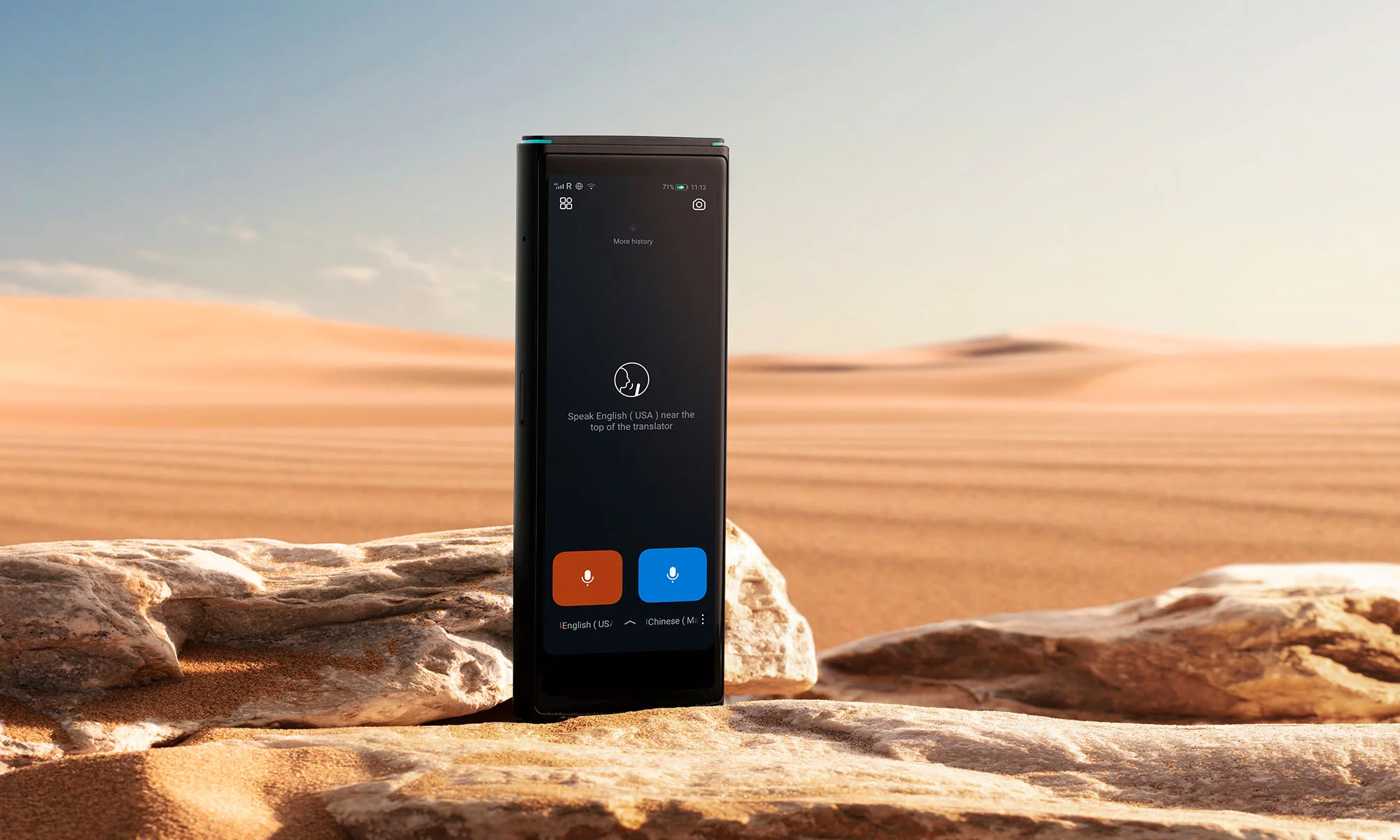
iFLYTEK Smart Translator
This is where a powerful tool like the iFLYTEK Smart Translator becomes an indispensable companion. Imagine this scenario: you've successfully used Konbanwa at a local izakaya, and the host responds with a flurry of polite Japanese you don't catch.
The iFLYTEK Smart Translator offers:
Real-Time, Two-Way Translation
It can instantly translate spoken Japanese into your native language and vice versa, allowing you to maintain a fluid, natural conversation even when your vocabulary runs out.
Scene-Based Translation
Perfect for quick, context-specific translations when you're ordering food or asking for directions.
Reliable Offline Functionality
Crucially, the iFLYTEK Smart Translator excels with its robust offline translation capability. This feature ensures that even if you lose Wi-Fi or cellular service while hiking Mount Fuji or wandering through remote temples, you can still access high-quality, two-way Japanese-to-English translation instantly. No signal? No problem. This reliability is essential for travelers who prioritize consistent communication in any situation.
By keeping the iFLYTEK Smart Translator handy, you can turn a tentative "hello" into a full, meaningful interaction, ensuring you never miss the context after the initial greeting, regardless of your network connectivity.
Greetings in Different Situations
Context is everything. Here are a few unique ways greetings are used:
When Answering the Phone: You say, Moshi Moshi (もしもし). You would not use Konnichiwa here.
When Entering Someone's Home: You say, Ojama Shimasu (おじゃまします), which roughly means, "Excuse me for intruding."
At Work (Leaving for the Day): You say, Otsukare Sama Deshita (お疲れ様でした), meaning "Thank you for your hard work."
Useful Tips for Travelers
For visitors to Japan, demonstrating a little effort goes a long way.
Smile and Bow
Combine your verbal greeting with a polite bow (even a slight nod) for maximum impact.
Practice Pronunciation
Japanese is phonetic, so focus on crisp, clear vowel sounds.
Start Formal
When meeting someone new, always default to the formal greetings (Ohayō Gozaimasu, Konbanwa, Konnichiwa). Let them signal if they are comfortable switching to casual terms.
Final Thoughts
Learning how to say "Hi" in Japanese is more than just rote memorization—it's an act of respect and cultural appreciation. By understanding the nuances of Konnichiwa, the appropriate time for Ohayō Gozaimasu, and the power of a simple bow, you’re already well on your way to having rich and rewarding experiences in Japan. And for those moments when your Japanese is still catching up, remember your linguistic safety net, the iFLYTEK Smart Translator, is ready to bridge the gap!
FAQs
How to say I love you in Japanese?
The most common way to express "I love you" is Aishiteru (愛してる). However, this phrase is often considered quite strong and serious. In everyday conversation, many Japanese people prefer the softer phrase Suki da (好きだ), meaning "I like you," or Daisuki da (大好きだ), meaning "I love you" or "I like you very much."
How to say thank you in Japanese?
The most standard way to say "thank you" is Arigatō (ありがとう). To make it formal and more polite, add gozaimasu: Arigatō Gozaimasu (ありがとうございます). For a very deep, formal expression of gratitude, often used in business or customer service, you can use Dōmo Arigatō Gozaimasu (どうもありがとうございます).
Read More: