

Have you ever wanted to speak a new language but felt overwhelmed by how long it might take? The good news is that not all languages are equally hard to learn, especially if English is your first language. Some languages are simply easier to pick up than others.
In this guide, we’ll explore what makes a language easy, what’s the easiest language to learn for English speakers, and even show you how smart tools like AI-powered translator devices can fast-track your progress.
1. What Makes a Language Easy to Learn?
What exactly makes a language “easy”? Is it the grammar, the pronunciation, or how often you’re exposed to it? The answer is: all of the above and more. Now let’s break down the key aspects that determine how easy (or hard) a language might be for you.
Similar Grammar and Vocabulary
Languages that share roots with English, like other Germanic or Romance languages, often have familiar grammar structures and a high percentage of shared vocabulary.
Pronunciation
Languages with fewer tones, simpler sounds, and consistent pronunciation rules are typically easier.
Alphabet and Script
Using the Latin alphabet (A-Z) can make a language much easier for English speakers. Learning languages with completely different writing systems (like Mandarin or Arabic) usually requires more time.
Cultural Exposure
The more you’re exposed to the language through music, movies, travel, or community, the easier it will be to pick up and use in daily life.

2. Top 5 Easiest Languages to Learn for English Speakers
If English is your native language, some foreign languages will feel far more approachable due to shared roots, similar sentence structure, or familiar vocabulary. Among the many choices, five languages consistently rank as the easiest to grasp for English speakers, and for good reason.
Spanish
Spanish often tops the list. Thanks to its phonetic spelling system and relatively simple grammar, learners find it easier to pronounce words as they’re written. Additionally, Spanish is widely spoken in the Americas and Europe, offering plenty of opportunities to practice.
French
French, while slightly more complex in pronunciation, is another popular choice. As a Romance language, it shares a large number of cognates with English, due to both languages borrowing heavily from Latin and Norman roots. Despite the occasional irregular verb or gendered noun, learners often progress quickly.
Italian
Italian is celebrated for its musicality and regularity. Its grammar is straightforward, and its pronunciation rules are consistent, making it particularly friendly to English speakers. Italian also has a relatively small vocabulary base required for basic conversations.
Dutch
Dutch may not be as globally widespread as Spanish or French, but it’s surprisingly easy for English speakers. That’s because English and Dutch both stem from the Germanic language family. Many Dutch words sound or look familiar, and their grammar is more forgiving than that of German. The major challenge might be pronunciation and regional accents, but the structural similarities with English help offset that.
Norwegian
Norwegian is another hidden gem for learners. With simple grammar rules, consistent pronunciation, and a subject-verb-object sentence structure similar to English, Norwegian is often cited as one of the easiest languages to learn.

3. What’s the Hardest Language to Learn?
While some languages invite you in with open arms, others challenge even the most dedicated learners. Understanding what makes a language difficult can offer a useful contrast and might help you avoid frustration when you're just starting.
1. Mandarin Chinese
Mandarin Chinese is frequently cited as the most difficult language for English speakers. It has a completely different writing system that uses thousands of unique characters, rather than an alphabet. The tonal nature of the language, where the pitch used when speaking can change the meaning of a word, adds an additional layer of complexity.
2. Arabic
Arabic poses its own set of challenges. Written from right to left in a cursive script, Arabic requires learners to adjust their reading habits entirely. The language has a rich system of root-based word formation and a high level of grammatical complexity, including case endings, verb conjugations, and gender agreement.
3. Japanese
Japanese combines the challenges of both Chinese and a complex grammar system. Learners must master three scripts: hiragana, katakana, and kanji, and navigate honorific speech levels, which vary depending on social hierarchy. Sentence structure is also different from English, often placing the verb at the end of the sentence.
4. Hungarian
Languages like Hungarian rank high in difficulty. Hungarian grammar includes 18 grammatical cases, making it intimidating for English speakers.
5. Korean
Korean, though praised for its logical writing system (Hangul), has complex verb forms and honorifics that can trip up learners.
4. How to Choose the Right Language for You

Choosing the “easiest” language isn’t just about the grammar or alphabet, it’s about what motivates you and how you plan to use it. Ask yourself:
- Are you planning to travel? Where?
- Does the language open up career or educational opportunities?
- Are you drawn to the culture—movies, music, food?
- Do you have friends or family who speak it?
Tip: Motivation can make a hard language feel easier, and a lack of it can make an easy one frustrating.
5. Tips for Learning Any Language Faster
Learning a new language doesn’t have to take years. With the right mindset, tools, and strategies, you can significantly speed up your progress.
One of the most effective ways to accelerate language acquisition is through immersion. Surrounding yourself with the target language helps your brain start to think in it naturally.
Spaced repetition
Another powerful technique is spaced repetition, especially for vocabulary. Instead of cramming a large number of words in one session, spaced repetition uses intervals to revisit words over time just before you’re about to forget them.
Consistency
Consistency matters more than intensity. It’s better to study 15 minutes a day than to do a 3-hour session once a week. Short, focused practice sessions keep your brain engaged and prevent burnout.
Speaking of conversation
Speaking of conversation. Many learners postpone speaking until they feel “ready,” but the truth is, you become ready by speaking. Start with simple phrases, even if they’re imperfect. The earlier you get comfortable speaking, the faster your fluency will grow.
Leverage technology and Smart Learning Tools
Finally, leverage technology and smart learning tools. From AI-powered language tutors to real-time translation devices, modern tools can help bridge gaps when your skills are still developing.
Boost Your Language Learning with Smart Tech
Even the easiest language becomes easier when you have the right tools. That’s where smart translator devices come in.
6. Why Use a Translation Device?
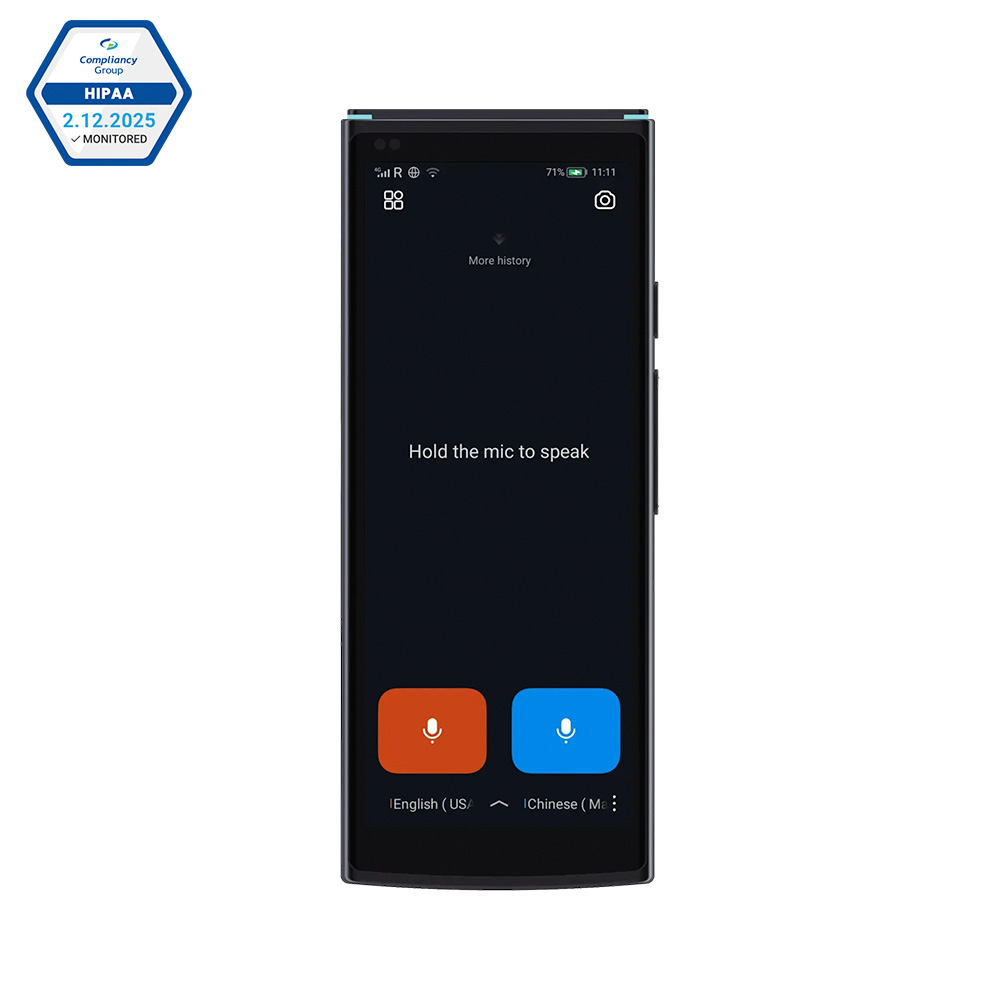
While apps are convenient, dedicated translation devices are more accurate, faster, and better for real-time conversation, especially in noisy or offline environments. iFLYTEK Smart Translator is one of the most effective companions for this journey.
It's more than just a translation device, it's a smart language companion that helps you absorb and internalize new languages through real-world usage, personalized practice, and immersive experiences. If you're serious about learning a new language in a smarter, faster, and more enjoyable way, this device deserves a spot in your toolkit.
7. How iFLYTEK Smart Translator Helps You Learn a New Language Faster

25 Years of AI-Powered Accuracy: Backed by over two decades of AI innovation, iFLYTEK's smart translation engine delivers accurate, natural translations. It understands context and tone, helping language learners grasp real-world usage and sentence structures more intuitively.
Smart Translation Algorithms for Different Learning Scenarios: It adjusts its tone and responses based on the situation. This contextual awareness supports deeper understanding and real-life learning.
Instant Face-to-Face Translation: Engage in real-time bilingual conversations. This hands-on practice helps you internalize sentence patterns, pronunciation, and vocabulary through active use.
OCR Camera Translation for Immersive Learning: This immersive method allows learners to absorb vocabulary in natural environments, making it perfect for building practical language skills while on the go.
Support for 60 Languages: With coverage of 60 global languages, learners can explore multiple language options or focus on one with comprehensive support.
Offline Translation Mode: Even without internet access, you can continue practicing and translating anywhere.
Clear Audio with Hi-Fi Speaker and Noise Cancellation: With a custom Hi-Fi speaker and noise-canceling technology, you can hear every word distinctly and practice your listening skills.
FAQs
1. What’s the absolute easiest language to learn for beginners?
Spanish is often considered the easiest due to its phonetics, grammar, and widespread usage.
2. Can I become fluent using only a translator device?
Translator devices are great tools, but they work best when combined with active study. They help bridge gaps and boost confidence.
3. Are translation devices better than smartphone apps?
Yes, especially for real-time conversations, offline use, and noisy environments.
4. How long does it take to learn a language like French or Italian?
With daily practice, you can reach a conversational level in 6–12 months.
Final Thoughts
Now I believe you know what the easiest language to learn is after reading this post. If you’ve been holding off on language learning because it felt intimidating, start with a language that plays to your strengths as an English speaker.
And don’t forget, with smart tools like our AI-powered translator, you’ll speak with more confidence, learn faster, and have fun along the way.
Related articles:
1. What is a speech to speech translation?
2. How does Device for Language Translation Revolutionize Business Communication?
3. The Ultimate Guide to Smart Translators
4. Best Translator Device Without Internet (2025 Guide)
5. Voice Recorder with Transcription: The Ultimate Tool for Effortless Note-Taking