
Visiting Japan is an exciting adventure, but the language barrier can make things difficult.
You might need help reading a menu in a small izakaya, understanding subway signs in Tokyo, or talking during a business meeting. In these cases, a good Japanese to English translator is very helpful.
There are many apps available, but which one works best for real communication? In this post, we will introduce some Japanese translator apps, analyze the pros and cons of each. With these tools, you can explore Japan or enjoy Japanese media with confidence.
Key Features of a Good Japanese Translator App
A top-tier Japanese translation app needs to be more than just a digital dictionary. Because of the unique complexity of the Japanese language (with its three scripts: Hiragana, Katakana, and Kanji), certain features are non-negotiable for travelers, students, and professionals. And for those who prefer a more reliable solution on the go, the best translator device without internet for Japanese can often outperform traditional apps in speed and accuracy.
- Offline Mode: Essential for traveling in areas with poor Wi-Fi or avoiding expensive roaming charges.
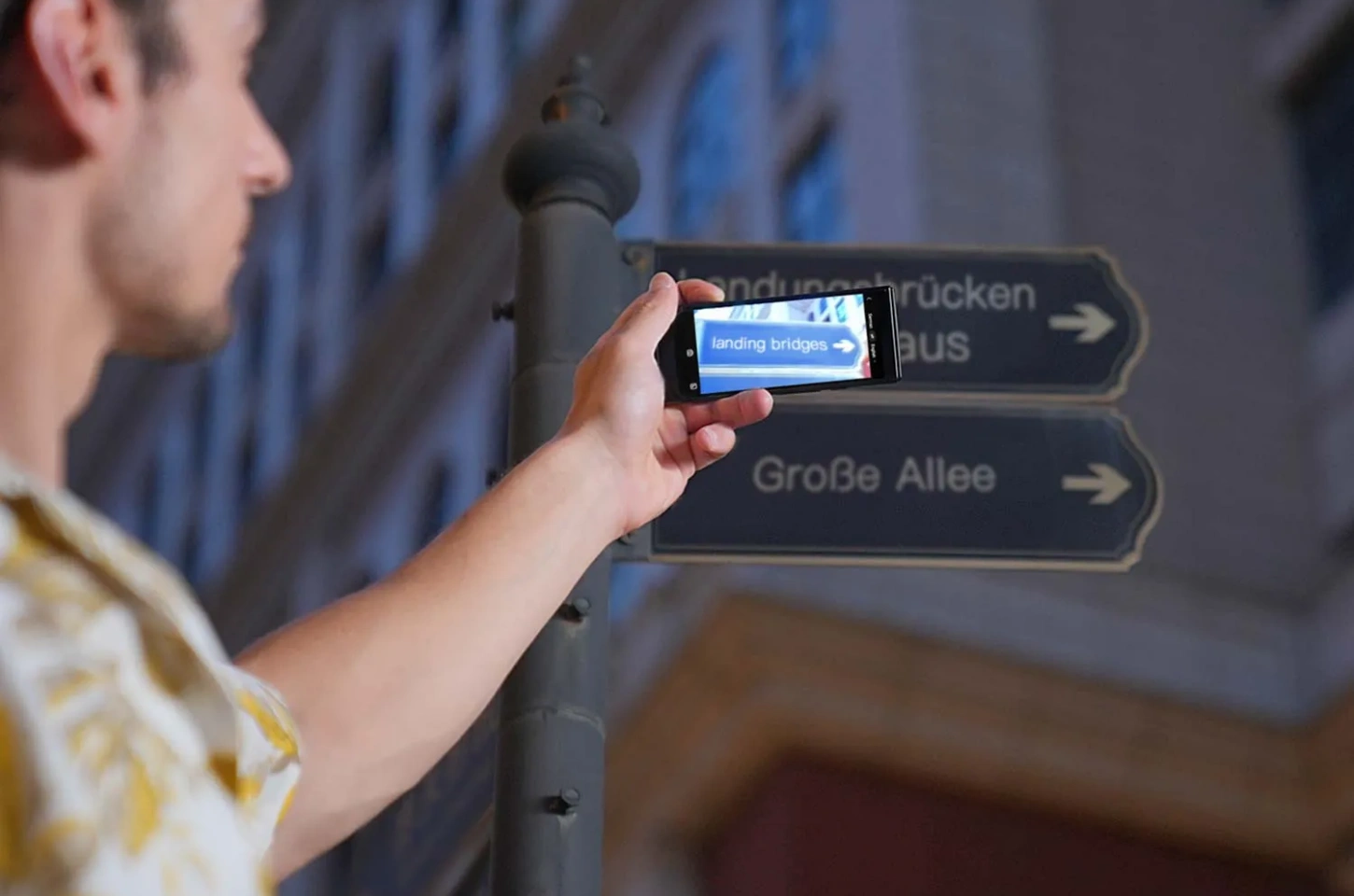
- Camera Translation (OCR): The ability to point your phone's camera at text (like street signs, menus, or product labels) and get an instant, overlaid English translation. This is a massive time-saver.
- Voice/Conversation Mode: Crucial for real-time communication, allowing two people to speak in different languages and hear near-instant interpretations.
- High Contextual Accuracy: Japanese relies heavily on context and politeness levels. The best apps can interpret nuances rather than just literal word-for-word exchanges.
- Handwriting Input: Useful for translating handwritten notes or rare Kanji characters you might want to draw.
Top Japanese to English Translator Apps
With the key features in mind, here is a breakdown of the most popular and highly-rated translation apps currently available for Japanese to English.
1. Google Translate
No list is complete without Google Translate, the ubiquitous giant in the translation world. It is a fantastic starting point for any traveler due to its sheer versatility.
Scenario Spotlighting: Stuck at a station, trying to figure out which platform to take? Google Translate’s Instant Camera Translation is a lifesaver, providing a direct English overlay on Japanese signs as you look through your camera.
It supports an impressive number of languages and offers offline translation packages, making it reliable even in rural areas. While its translations for simple phrases are accurate, it can sometimes struggle with the polite forms and subtle contextual meanings of complex Japanese sentences.
2. DeepL Translator
DeepL has quickly earned a reputation for providing some of the most natural, human-sounding translations on the market. It excels where others fail: understanding context.
If you are a student translating challenging news articles or a business professional dealing with detailed emails, DeepL’s AI-powered engine often delivers superior, fluently written results. Its strength lies in text translation, making it the preferred choice for written content over spontaneous conversation.
3. Papago (by Naver)
Developed by South Korean tech giant Naver, Papago (meaning "parrot" in Esperanto) is often hailed as one of the best for Asian languages, including Japanese, Korean, and Chinese.
Many users report that Papago’s Japanese to English translations feel more natural and accurate for casual, everyday conversations than its competitors, making it a favorite for general travel and simple interactions.
It features text, voice, and image translation, along with a useful Papago Mini that floats over other apps for quick, effortless translation on the go.
4. iTranslate
iTranslate offers a highly intuitive and aesthetically pleasing interface. While it may not have the deep-learning accuracy of DeepL or the popularity of Google, it's an excellent choice for those who value speed and ease of use. It offers a useful voice-to-voice conversation mode and dictionary integration, though many of the premium features require a paid subscription.
5. Japanese Translator Offline
As the name suggests, this type of app focuses heavily on providing a robust database of common words and phrases that work entirely without an internet connection. While it won't handle complex, custom sentences as well as the cloud-based apps, having a reliable, ready-to-go dictionary and phrasebook is invaluable when you're completely off the grid.
Limitations of Translation Apps
Despite their advanced technology, mobile apps have inherent limitations, particularly for long or high-stakes conversations:
Latency
There’s always a slight delay as you speak, the app processes, and the translation is generated, which can interrupt the flow of conversation.
Noise
Apps struggle to filter out background noise in busy settings (like crowded restaurants or trains), severely impacting accuracy.
Battery Life
Continuous use of voice and camera features can quickly drain your phone's battery.
Cultural Nuances
No app can perfectly convey body language, tone, or the necessity of using honorific language (keigo).
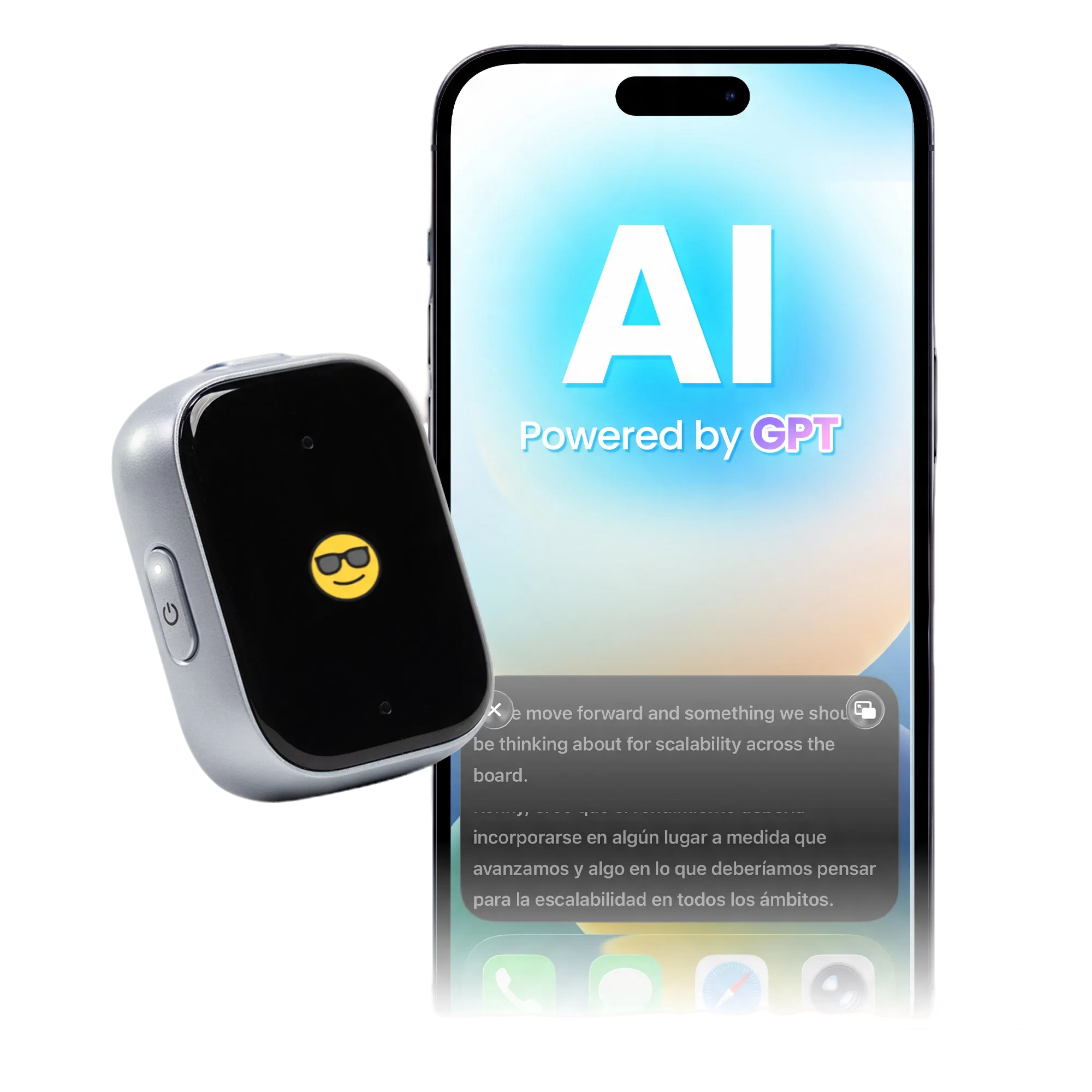
Best Japanese to English Translator Device: iFLYTEK Smart Translator

When you need guaranteed accuracy and seamless, real-time communication—especially for business or critical travel situations—a dedicated device is the superior choice. This is where the iFLYTEK Smart Translator stands out as the ultimate upgrade.
Instead of relying on a smartphone app's general-purpose hardware, the iFLYTEK device is engineered specifically for translation.
Imagine meeting with a Japanese client. Instead of fumbling with an app, you simply place the dual-mic iFLYTEK Smart Translator between you. It provides near-instant, two-way, noise-canceling translation. It even supports offline translation for key language pairs, including Japanese, making it infinitely more reliable and professional than any app on your phone. It is the gold standard for bridging major language gaps.
For travelers and businesspeople who want to eliminate the "clumsy app moment" and ensure clarity, a dedicated device like the iFLYTEK is a game-changer that elevates the entire communication experience.
Tips to Get the Most Accurate Translations
Regardless of whether you choose an app or a language translator device, you can improve your results by following these simple tips:
Speak Slowly and Clearly: Enunciate your words and avoid slang or complicated sentence structures.
Keep Sentences Short: Break long, complex thoughts into a series of simple sentences for better app processing.
Check the Politeness Level: When translating English to Japanese, if possible, manually adjust the text to use a more polite or formal tone to ensure proper social etiquette.
Use the Right Mode: Don't use voice mode in a quiet library (use text) and don't try to use instant camera translation for a book (use photo translation).
Conclusion
The "best" Japanese to English translator depends entirely on your needs.
For casual travel and quick sign translation, the free and feature-rich Google Translate remains a powerful tool. For translating complex, written text like emails or documents, DeepL Translator is arguably superior.
However, for professional, face-to-face conversations and high-stakes travel where reliability, speed, and professionalism matter most, a dedicated device like the iFLYTEK Smart Translator is the clear winner, offering a seamless experience that apps simply cannot match.