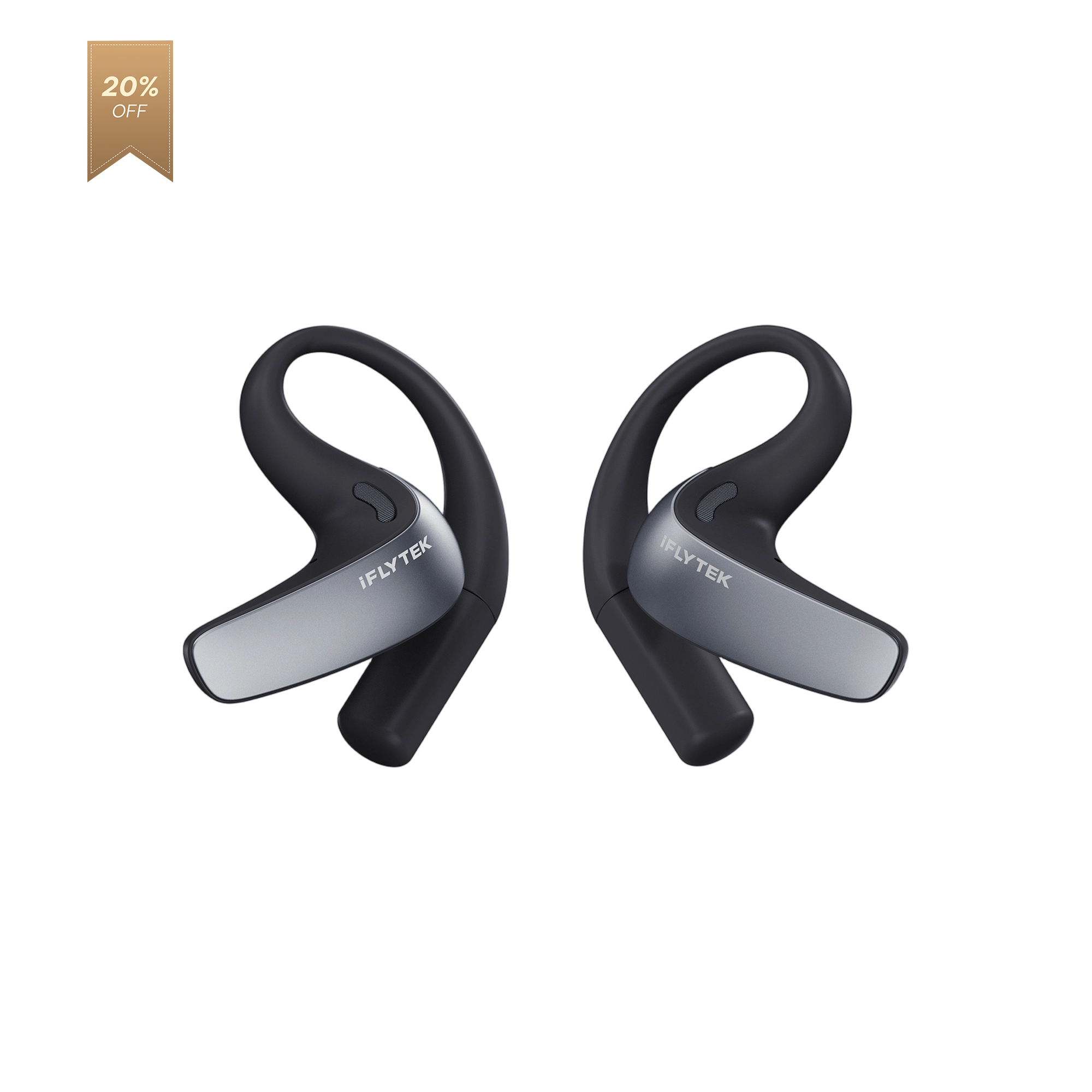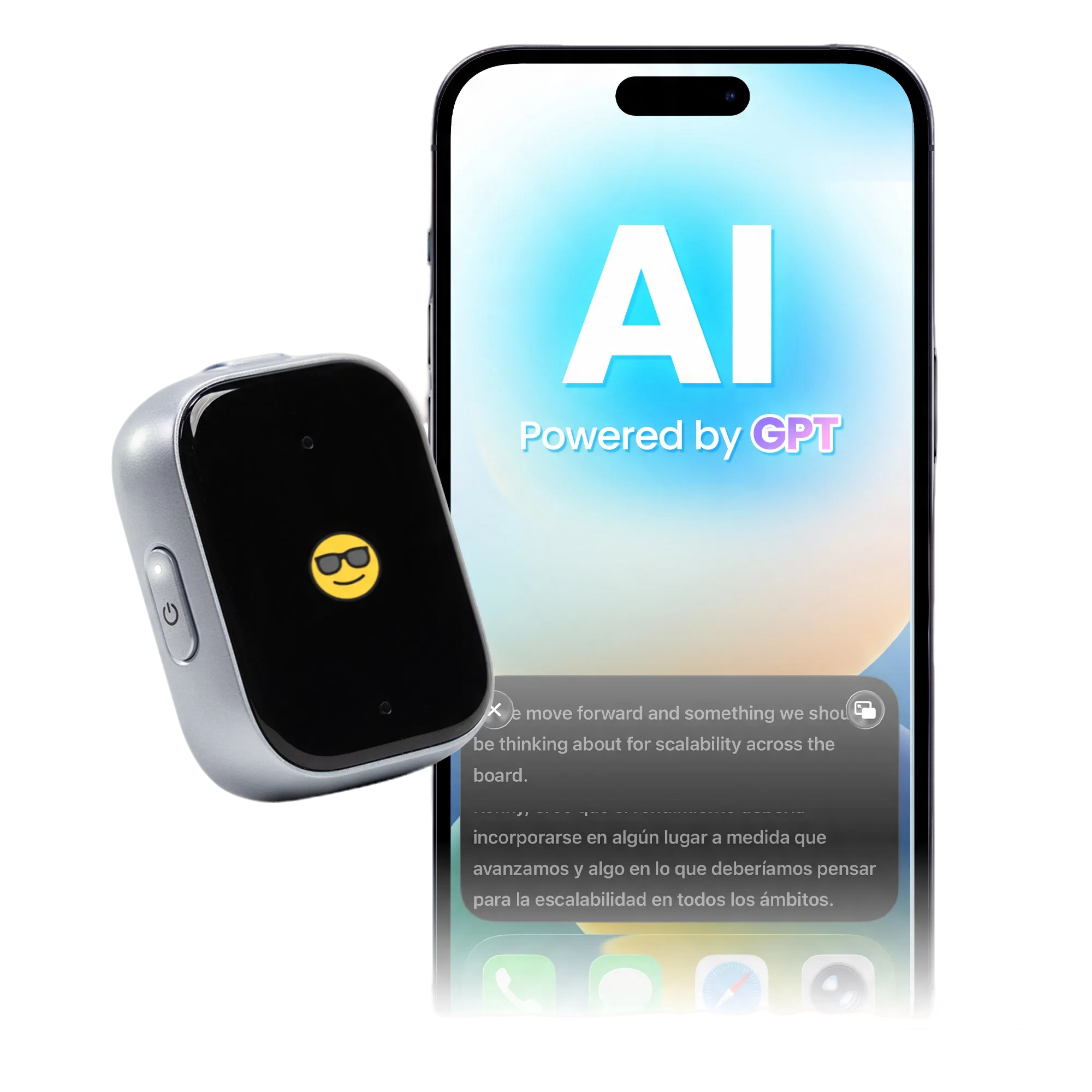
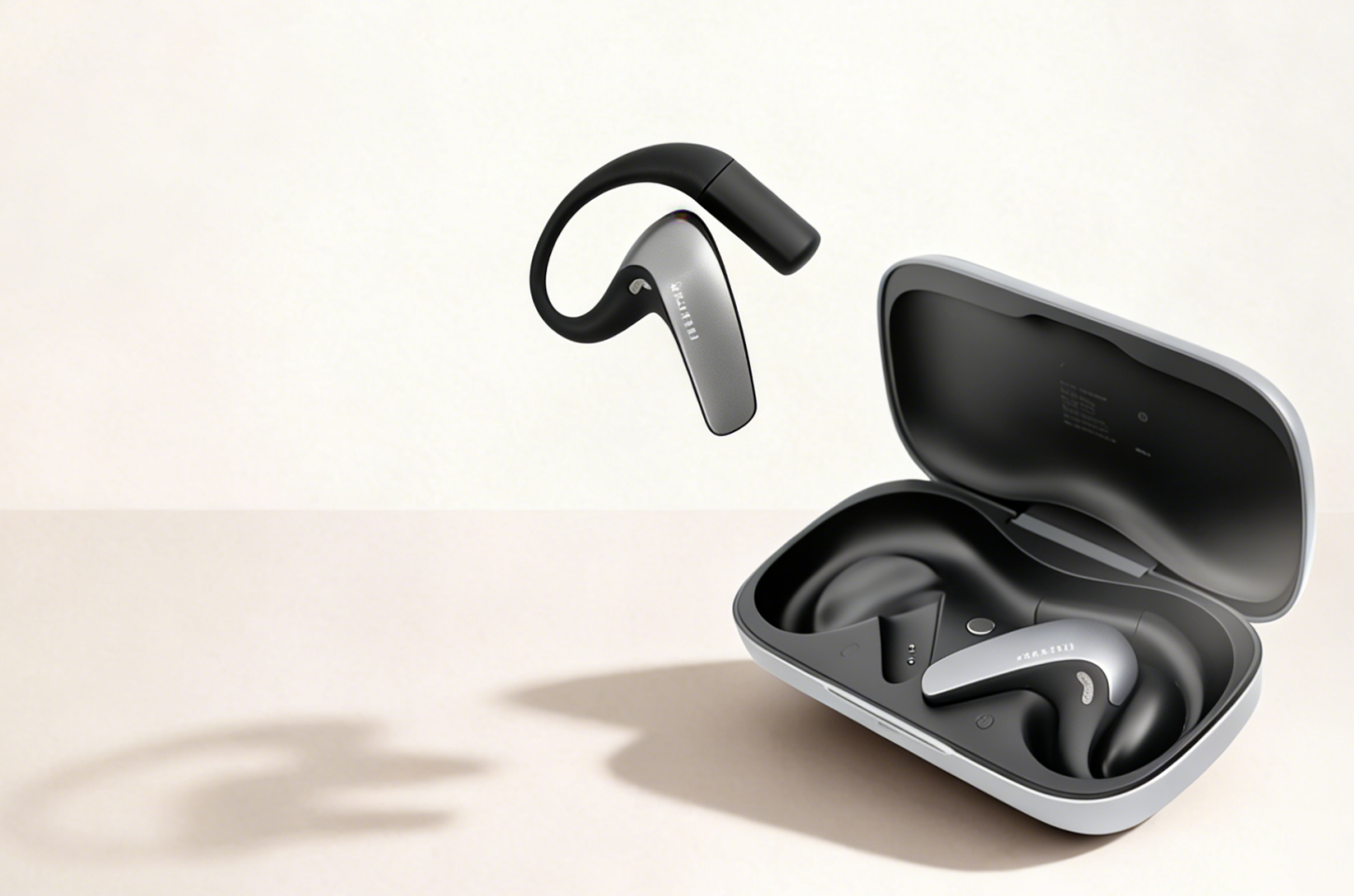
In an increasingly globalized world, the dream of effortless communication is becoming a reality. Whether you’re ordering food in Mexico City, asking for directions in Barcelona, or joining a sales call with a client in Bogotá, translation earbuds can help you communicate in English and Spanish in real time. They allow users to hold fluid, natural conversations across language barriers in real-time.
But how exactly does an advanced piece of tech sitting in your ear turn spoken Spanish into clear English, or translate English into natural Spanish, within seconds? Let’s explore the mechanics, use cases, and the future of this technology.
What Are Translation Earbuds and How Do They Work?
Translation earbuds are wearable audio devices equipped with sophisticated microphones and AI-driven software designed to interpret spoken language on the fly. While they look like standard Bluetooth headphones, their internal architecture is optimized for voice clarity and data processing.
The "magic" happens through a four-step pipeline that occurs in the blink of an eye:
Speech Input (Voice Capture)
The process begins with high-quality microphones. Most translation earbuds use Beamforming Technology and Dual-Mic Noise Cancellation. This ensures that the device captures your voice or your partner's voice while filtering out ambient noise like street traffic or cafe chatter.
Speech Recognition (ASR)
Once the audio is captured, it is processed by Automatic Speech Recognition (ASR). This AI component converts the acoustic waves into digital text. Modern ASR is incredibly nuanced, capable of understanding various accents, dialects, and even "ums" and "ahs," though clarity on the speaker's part remains important.
Machine Translation (MT)
The digital text is then sent to a translation engine, which is often hosted in the cloud or processed locally via specialized AI chips. Using Neural Machine Translation (NMT), the system analyzes the context of the sentence rather than just translating word-for-word. This results in more natural, grammatically correct output.
Good systems also handle regional Spanish accents and vocabulary differences (Spain vs. Latin America), including variations in everyday terms and expressions. This is often where basic translation tools struggle.
Text-to-Speech (TTS)
Finally, the translated text is converted back into audio via Text-to-Speech (TTS). This synthesized voice is played back into the listener's ear. High-end earbuds now offer "emotional" TTS that mimics human intonation, making the conversation feel less robotic.
How to Use Translator Earbuds? (Step by Step)
The translation earbuds are powerful and easy to use. Follow these four steps when using them.
Pair the Earbuds With Your Phone or App
Most translation earbuds serve as a bridge between the user and a smartphone app. You’ll need to pair the buds via Bluetooth and open the manufacturer’s dedicated app, which handles the heavy lifting of the translation processing.
Select Languages and Translation Mode
Open the app and select your native language and the target language. Most devices offer different modes.
Touch Mode:Tap the bud to speak; tap again to translate.
Listen Mode:The bud continuously listens and translates a one-way speech, such as a lecture.
Speaker Mode:You wear the buds, and your phone’s speaker plays the translation for the other person to hear.
Start Speaking at a Natural Pace
While AI has improved, it still benefits from clear enunciation. Speak in complete sentences rather than fragments. The earbuds will capture the audio and start the processing cycle immediately.
Listen, Respond, and Adjust in Real Time
The translated audio will play in your ear (or your partner’s). Because there is often a slight latency, it’s best to wait for the translation to finish before responding. Many apps also display a transcript on the screen so you can verify the accuracy of the translation.
Use Cases: Who Are Translation Earbuds For?
These devices aren't just for tech enthusiasts; they are solving real-world communication gaps across various sectors. Their applications are very wide-ranging, from studying and working to everyday communication.
Travellers and Tourists
Translation earbuds make it significantly easier to travel across Spain and Latin America. From ordering tapas in Madrid to asking for directions in Barcelona, or negotiating prices at a local market in Mexico or Peru, real-time English–Spanish translation removes the stress of language barriers. Instead of relying on broken phrases or hand gestures, travelers can communicate naturally and understand responses instantly. This leads to smoother transportation experiences, clearer restaurant interactions, and more meaningful cultural exchanges.
Business Professionals
In English–Spanish business environments, clarity and speed matter. Sales calls with Spanish-speaking customers, factory visits and supplier coordination in Mexico, and client meetings across Latin America all require accurate communication. In the United States, industries such as real estate, hospitality, and healthcare frequently interact with Spanish-speaking clients at front desks and service counters. Translation earbuds help professionals follow conversations in real time, respond more confidently, and reduce costly misunderstandings. While they are not a replacement for certified interpreters in legal or contractual negotiations, they are highly practical for day-to-day communication and relationship building.
Students and Educators
For students learning English or Spanish, translation earbuds can serve as a real-time feedback tool rather than a shortcut. They help learners check pronunciation, confirm comprehension, and build conversational confidence. This is especially useful for common English–Spanish pronunciation challenges, such as rolled “r” sounds, “b” and “v” distinctions, and fast connected speech. In multilingual classrooms across the U.S. and Latin America, these devices also help parents, teachers, and students communicate more effectively during meetings and presentations.
Do Translation Earbuds Work Without a Phone or Wi-Fi?
The short answer is: Usually not, but it's changing.
Most earbuds rely on a smartphone's data connection (Wi-Fi or 4G/5G) to access powerful cloud-based translation engines like Google, Microsoft, or DeepL. However, premium brands are increasingly offering Offline Translation Packs. By downloading specific language pairs (e.g., English-Spanish) directly to your phone or the earbud's memory, you can perform basic translations in areas with no reception, such as airplanes or remote hiking trails. Offline mode is helpful on flights or rural trips, but it may be less reliable for slang, fast speech, or heavy accents in Spanish. Note that offline translation is generally slightly less accurate than the cloud-based versions.
What Makes iFLYTEK AI Translation Earbuds Different?
According to the IDC 2025 Report on AI Translation, iFLYTEK leads the industry across eight core dimensions, achieving perfect scores in translation speed, quality, and product maturity. Officially launching on March 2, 2026, the latest iFLYTEK earbuds are more than just headphones. They are positioned as a next-generation AI partner for global communication.
The 2-Second Breakthrough: Powered by an upgraded End-to-End Simultaneous Interpretation Model, iFLYTEK delivers its first word of translation in just two seconds, virtually eliminating the awkward robotic pauses found in older devices.
Hybrid Noise Cancellation: These are the world’s first open-ear translation buds featuring a multimodal AI noise reduction system. By combining bone conduction and air conduction with a precise 30-degree pickup angle, they ensure your voice remains crystal clear even in chaotic environments like the GITEX Global exhibition in Dubai.
Professional Grade: With a database of over 100,000 professional terms, these earbuds handle high-stakes scenarios in medicine, finance, and manufacturing that would challenge standard translation apps.
Global Reach: Beyond common languages, iFLYTEK has strategically integrated Arabic and Hindi simultaneous interpretation, catering to the growing needs of global business hubs.
All-Day Comfort and Situational Awareness: Because the buds do not block the ear canal, you can comfortably wear them throughout a six-hour summit without ear fatigue. More importantly, they offer ambient transparency, allowing you to follow translated conversations while staying aware of your surroundings.
Conclusion
Translation earbuds have evolved from simple gadgets into vital bridges for human connection. While we haven't reached the stage of "instant telepathy," the leap in AI-powered wearables has brought us remarkably close. We are no longer just translating words; we are preserving the rhythm, emotion, and speed of human conversation.
In the near future, the arrival of the iFLYTEK series marks a definitive milestone in this journey. If you're a world traveler, a global entrepreneur, or a lifelong learner, the new generation of iFLYTEK AI translation earbuds promises a world where every voice is heard, and no message is lost in translation. The era of the "universal translator" isn't coming; with iFLYTEK, it’s already here.
FAQs
1. Do Translator Earbuds Need a Phone?
Yes, for 90% of the models on the market. The phone provides the processing power and the internet connection required to run the translation AI.
2. Do Translation Earbuds Need Wi-Fi?
Not necessarily. They can work on cellular data. Some high-end models also support offline translation for specific language pairs, though you must download the data packs in advance.
3. Why Do Some People Think Dedicated Translation Earbuds Won’t Survive?
Critics argue that as standard earbuds (like AirPods or Pixel Buds) integrate translation features into their OS, dedicated devices might become obsolete. However, dedicated buds often offer superior microphone arrays and specialized software modes that "all-purpose" buds lack.
4. How Do I Activate Translation on My Earbuds?
Usually through a long press on the earbud's touch sensor or by selecting the "Start" button within the paired smartphone app.
5. Can Translation Earbuds Replace Professional Interpreters?
No. For high-stakes legal, medical, or diplomatic negotiations, the nuance and cultural sensitivity of a human interpreter are still irreplaceable.