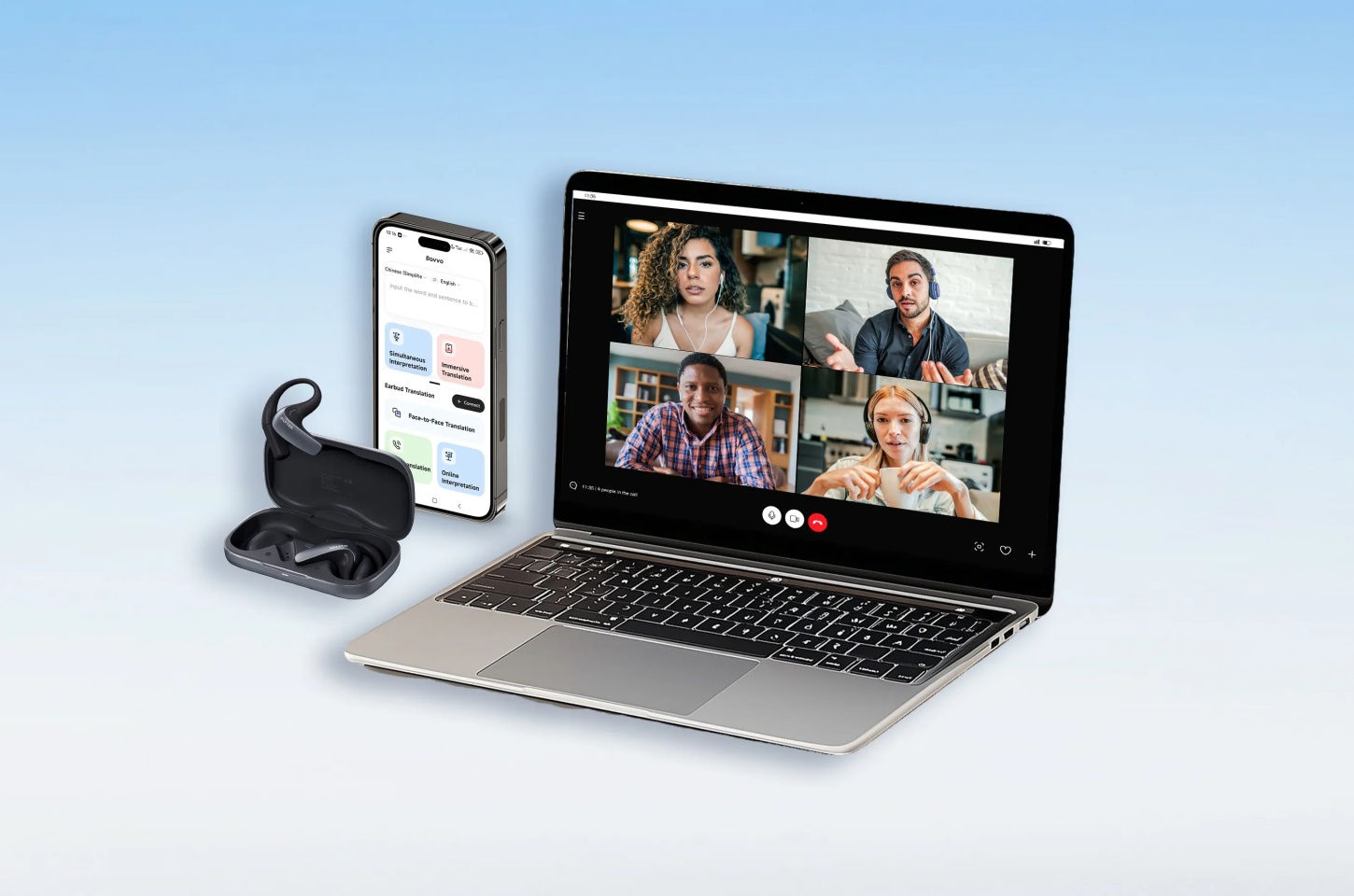
For real-time, natural interaction, translation earbuds outperform phone apps by enabling continuous and seamless cross-language communication. While apps handle short phrases well, earbuds allow users to speak naturally without the awkwardness of passing a phone or pausing for manual inputs.
For travelers, international professionals, freelancers, and students studying abroad, this distinction is critical. Conversations in the real world rarely happen in neatly separated sentences. People interrupt, ask follow-up questions, and speak quickly. Translation earbuds are built to keep up with that rhythm. In this article, we’ll explore how these tools differ and why translation earbuds are the superior choice for real-time communication.
How Do Translation Earbuds and Phone Translation Apps Work Differently?
At a glance, both tools seem to do the same thing: convert Language A to Language B. However, the underlying technical workflow is vastly different.
Phone Translation Apps primarily rely on a "push-to-talk" or "text-input" model. You speak into the phone’s microphone, the app processes the audio through a cloud-based server, and then it plays the translation back through the phone's speaker. This creates a physical barrier by requiring the phone to be passed back and forth or held between speakers.
Translation Earbuds, on the other hand, follow a streamlined, multi-step process:
Voice Capture: High-end earbuds use beamforming microphones and bone-conduction sensors to extract your voice from background noise.
On-Device & Cloud Processing: Captured audio travels via high-speed, low-latency Bluetooth to a hybrid AI engine. This system combines on-device speed with powerful cloud-based neural networks to deliver near-instant, contextually accurate translations.
Simultaneous Interpretation: Unlike apps that wait for you to finish a whole sentence, modern earbuds use "Streaming Speech Recognition." They begin translating the first half of your sentence while you are still speaking the second half.
Direct-to-Ear Delivery: The translated audio is played directly into the listener's ear, allowing for "Full-Duplex" communication, where both parties can speak and hear simultaneously.

Translation Earbuds vs. Phone Translation Apps: Feature Comparison
In order to further understand the more detailed differences between translation earbuds and phone translation apps, we compare them from various dimensions.
|
Feature |
Translation Earbuds |
Phone Translation Apps |
|
Interaction Style |
Hands-free, natural eye contact |
Handheld, requires looking at screen |
|
Conversation Flow |
Real-time simultaneous (fluid) |
Consecutive stop-and-go (fragmented) |
|
Noise Handling |
Directional mics & noise cancellation |
Susceptible to ambient background noise |
|
Privacy |
Private, direct-to-ear audio |
Public speaker playback |
|
Long Conversations |
Ideal for 30+ minute meetings |
Tiring; screen/app may timeout |
|
Professionalism |
Professional & non-intrusive |
Can appear casual or disruptive |
|
Accuracy |
High (optimized for voice) |
Variable (depends on phone mic quality) |
Why Translation Earbuds Are Better for Real-Time Communication
While phone apps handle simple phrases, they often disrupt the flow of natural conversation. In contrast, translation earbuds eliminate these physical barriers by integrating a streamlined, multi-step process that captures and translates speech without the constant need for manual input.
Hands-Free Communication for Natural Conversations
When you use a phone app, you are tethered to a screen. You look down, you tap, you wait. Translation earbuds remove the device from the visual field. This allows you to maintain eye contact and use natural body language, which accounts for over 50% of human communication. By keeping your hands free, you can gesture, take notes, or share a meal without the awkward device exchanges.
Faster Response With Less Interruption
Most apps have a 2-5 second delay between the end of a sentence and the start of a translation. Top-tier translation earbuds have reduced this latency to as low as 0.2s. This near-instantaneous feedback ensures that the rhythm of the conversation remains intact, preventing those "I thought you were done speaking" misunderstandings.
Better for Long and Continuous Conversations
If you are attending a two-hour seminar or a long dinner, holding a phone up is impractical. Translation earbuds are designed for endurance. With ergonomic designs and "Simultaneous Mode," you can listen to a continuous stream of foreign speech for hours without ever touching your device.
Improved Accuracy in Noisy Environments
Phone microphones are designed for short-distance talking. In a noisy airport or a crowded trade show, they struggle to distinguish your voice from the crowd. Translation earbuds use dual-microphone arrays and AI noise-reduction algorithms (suppressing up to 80 dB of noise) to ensure the AI engine gets a crystal-clear signal, resulting in much higher translation accuracy.
More Professional in Business and Workplace Settings
In a boardroom, pulling out a phone can look like you are checking emails or distracted. Wearing a sleek pair of earbuds is increasingly seen as a professional tool, similar to a high-end headset. It signals that you are focused on the speaker and the content of the meeting.
.png?w=1920&h=960)
Why iFLYTEK AI Translation Earbuds Fit Real-Time Conversations Better
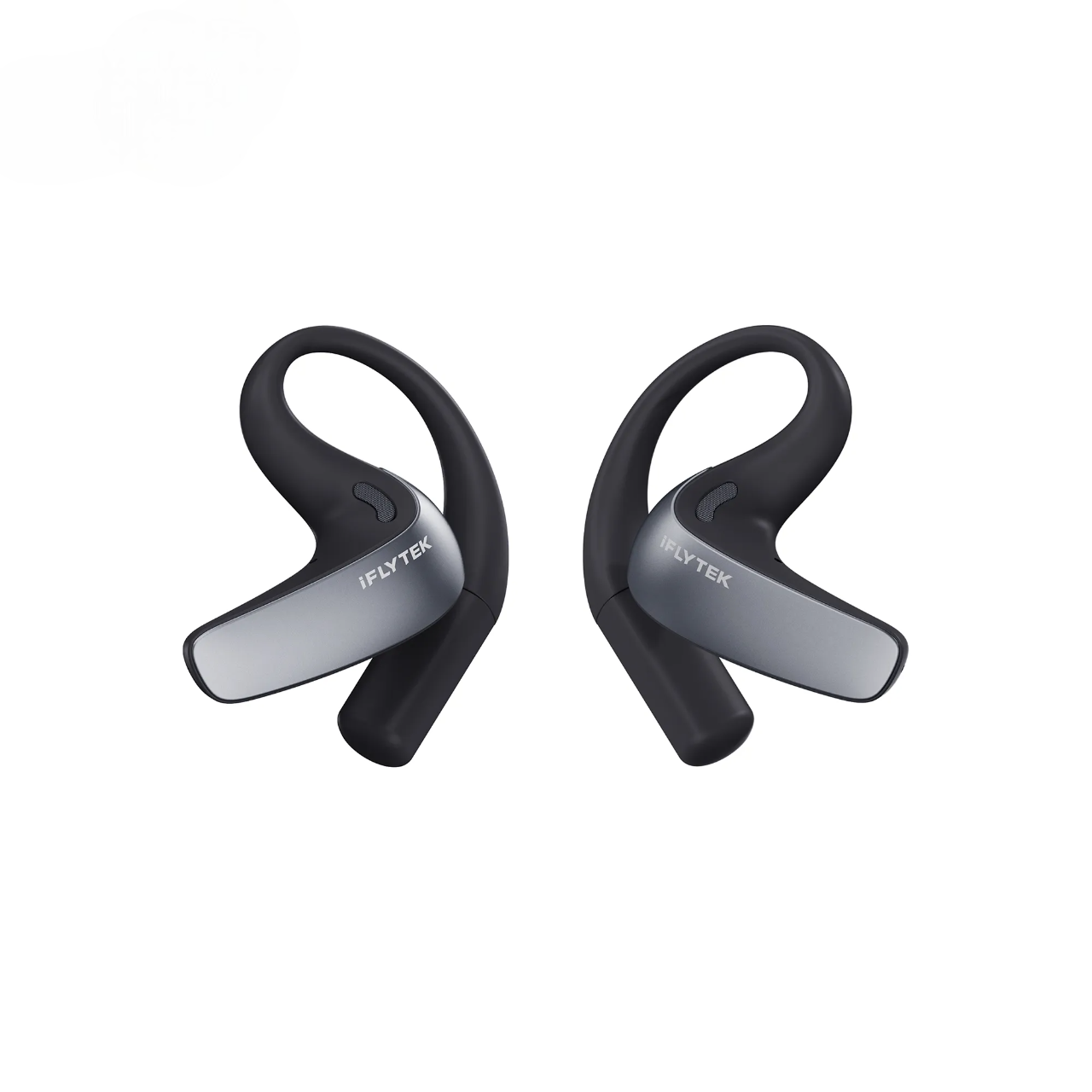
When discussing the gold standard of this technology, iFLYTEK occupies a leading position in the sector. As a global leader in speech recognition and artificial intelligence, their 2026 lineup of iFLYTEK AI Translation Earbuds offers features that traditional apps simply cannot match:
Superior Noise Cancellation: With a bone conduction sensor and dual-microphone arrays, the hardware can effectively suppress up to 80 dB of ambient noise, ensuring clear voice input even in chaotic, busy environments like airports.
Direct-to-Ear Privacy: Unlike apps that broadcast audio through speakers, these earbuds deliver translations directly to your ear. This ensures discretion for sensitive business negotiations and prevents awkward public interruptions.
Seamless Simultaneous Interpretation: Leveraging streaming speech recognition, the system provides real-time translation with a near-instant 0.2s start time. Users can speak and hear simultaneously (Full-Duplex), maintaining a natural conversation flow.
Specialized Industry Vocabulary: The system supports specialized terminology across 17 major industries, including legal, medical, and finance. This ensures high contextual accuracy, which generic translation apps often struggle to match.
Conclusion
The shift from phone apps to earbuds is more than a hardware upgrade; it is a move toward invisible technology, where the focus remains on the human connection rather than the tool. By removing the constant need for device exchanges, the iFLYTEK AI Translation Earbuds allow you to focus on the person, not the process. For those seeking meaningful international collaboration, this dedicated tool is the most effective way to turn a language gap into a shared opportunity.
FAQs
1. Are translation earbuds more accurate than phone apps?
Yes, generally. While they may use similar cloud-based AI, the hardware in earbuds is optimized for voice isolation. Better audio input leads to better translation output, especially in real-world, noisy environments.
2. Do translation earbuds need a phone to work?
Most models currently require a Bluetooth connection to a smartphone to access the AI processing power and data networks. However, the phone stays in your pocket, leaving the interaction hands-free.
3. Can translation earbuds work offline?
Yes, premium models like those from iFLYTEK offer offline language packs for major language pairs (e.g., English-Chinese, English-Japanese). This is vital for travelers who may not have a stable roaming signal.
4. Are translation earbuds worth it for travel?
5. Can translation earbuds replace human interpreters?
For casual conversation, travel, and standard business meetings, yes. However, for high-level legal, medical, or diplomatic proceedings where 100% legal accountability is required, professional human interpreters are still the standard.