
Have you ever felt powerless or even embarrassed by a misunderstanding when you're speaking with someone who has a thick accent, even though you're speaking the same language? That frustration of wanting to connect but not being able to is a common pain point for many. Don't worry, understanding accents isn't as difficult as you might think. This article will provide you with a series of practical methods on how to understand someone with a thick accent, so that helps you easily overcome accent barriers and make communication smooth and effortless.
Why Do Accents Make Communication Difficult?
Accents are a natural result of cultural and regional differences. Everyone's native language habits influence the way they speak a second language, leading to a unique accent. Understanding these differences is the first step toward solving communication problems.
Pronunciation Differences
The most obvious feature of an accent is pronunciation. For example, some languages don't have the "th" sound, so a speaker might substitute it with a "z" or "d," which can confuse the listener. Each person's native pronunciation habits subtly influence how they learn a new language, causing certain syllables to be pronounced differently from the standard.
Intonation and Rhythm
Beyond pronunciation, intonation and rhythm also pose challenges to understanding. Some languages have a flat intonation, while others are very melodic. When you're used to one intonation pattern, it can be difficult to follow another. Similarly, the pace of speech—whether it's fast or slow, choppy or fluid—also affects how information is delivered.
Vocabulary and Expressions
Accents aren't just about pronunciation; they often come with unique vocabulary and expressions. Some people might use direct translations of phrases from their native language, which can sound stiff or even confusing to a native speaker.
Traditional Strategies: How Can You Improve Your Listening Skills?
Once you understand the roots of accents, the next step is to improve your own listening ability. Traditional listening exercises and active communication skills remain key to solving the problem.
Listening Practice
Practice is key. Just like learning any skill, the more you are exposed to different accents, the more familiar you become. Try watching movies, TV shows, or podcasts with various accents. You can start with subtitles and then gradually try to understand without them. This kind of systematic training helps your brain adapt to different pronunciations and rhythms.
Active Communication
In a real conversation, don't be afraid to speak up. If you don't understand, politely ask the person to repeat themselves. Use phrases like "Could you please say that again?" or "Could you speak a little more slowly?" This not only helps you understand but also shows respect for the other person. Repeating and summarizing what the other person said is also a great way to confirm information and avoid misunderstandings. For example, you can say, "Just to be clear, you mean… right?"
A Modern Solution: How Can Technology Help?
When traditional methods fall short, you can leverage the power of technology. Today, many smart tools can help us overcome language and accent barriers.
The Modern Aid of the iFLYTEK Smart Translator
While traditional methods are effective, technology offers a powerful modern solution to communication challenges. When you're in a situation where you simply can't bridge the gap, a voice translator can be your best ally.

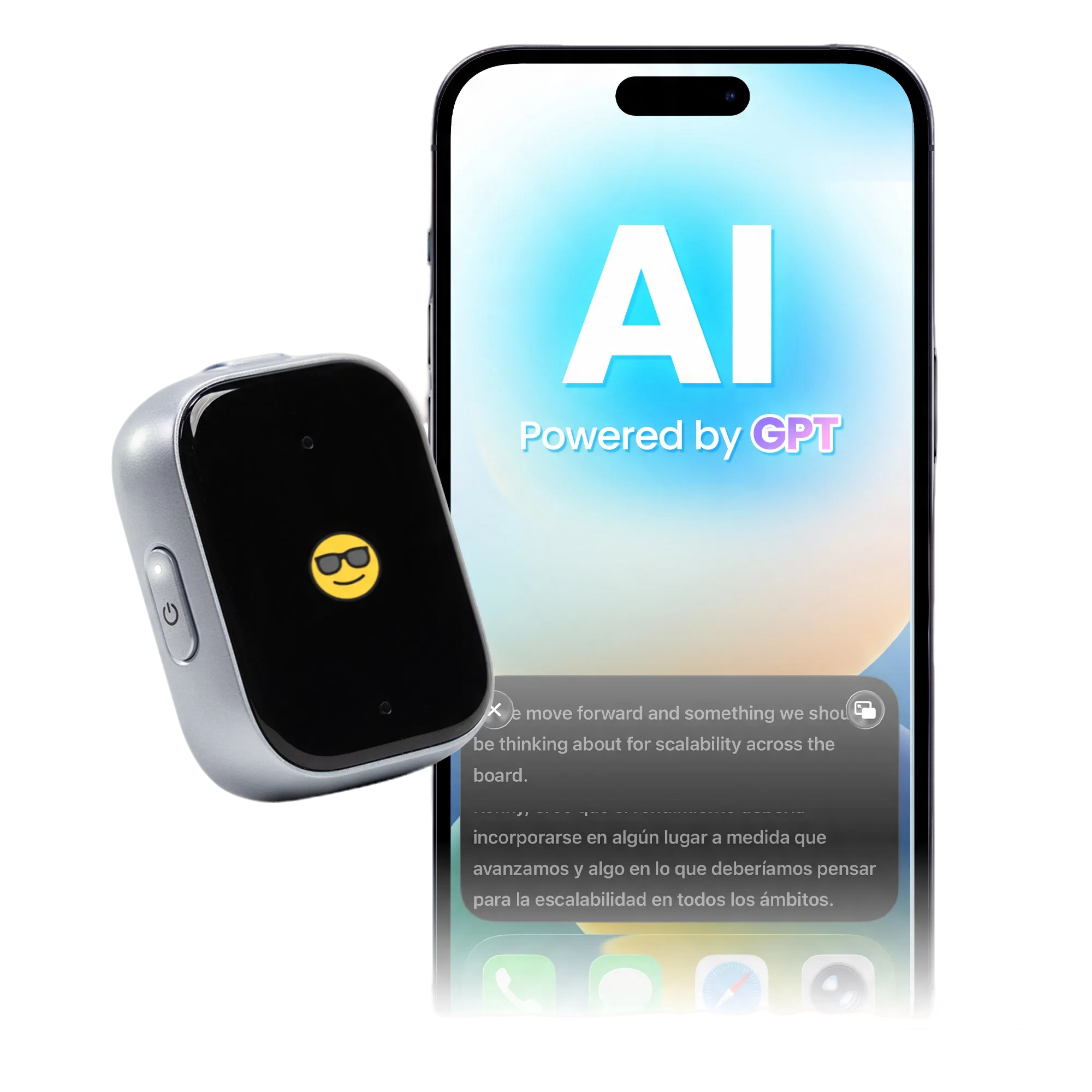
The iFLYTEK Smart Translator is a standout example. With over 25 years of expertise in speech recognition and AI, iFLYTEK has engineered a tool that can effectively identify and process speech with even the thickest accents. When you encounter an accent that's particularly hard to understand, you can simply ask the person to speak into the translator. The device will quickly convert the speech into clear text or provide a real-time audio translation, allowing you to understand their intent effortlessly.
This advanced capability is backed by a comprehensive feature set that directly addresses common communication pain points:
No More Internet Woes:
Sometimes, you're in a place with no Wi-Fi, which can make things even more difficult. The iFLYTEK Smart Translator offers real-time, accurate offline translation in multiple languages, so you're never caught off guard.
Covering All the Bases:
Communication isn't just about one-on-one conversation. The device supports 60 languages for online translation and 50 for photo translation using advanced OCR technology. This means you can understand not just a person's voice but also text from menus, signs, or documents, regardless of the accent or language.
Deepening the Conversation
For more complex dialogues, the translator can seamlessly capture and translate entire conversations. It even supports 60 languages for chat translation, ensuring that you can follow along with group discussions without missing a beat.
Having this device is like having a personal translator with you. It makes communication simple, secure, and smooth, so you can confidently break language barriers in any situation.
Patience and Empathy: The Foundation of Communication
No matter which method you use, the most important thing is to maintain patience and empathy. Remember that the other person is also trying their best to communicate in your language.
Empathy in Communication
Put yourself in the other person's shoes. Think about how difficult it is for us to express ourselves in an unfamiliar language in a foreign country. When you're talking to someone with a thick accent, a little more patience and a little less anxiety can make both of you feel more comfortable. A friendly smile and an encouraging look often do more to facilitate communication than any technique.
Summary
Understanding someone with a thick accent isn't difficult; it requires a combination of methods. Start by understanding the reasons behind accents, then use traditional listening exercises and active communication strategies, and finally, leverage modern tools like the iFLYTEK Smart Translator. Ultimately, patience and empathy are the foundation of successful communication. When you integrate these methods, accents will no longer be a barrier, but a window to a wider world.
FAQs
How can I politely ask someone to repeat themselves?
You can say, "I'm sorry, I didn't quite catch that. Could you please say that again?" or "Excuse me, could you please speak a little more slowly?" A friendly attitude usually makes them happy to help you.
What should I do if I still can't understand?
If you've tried a few times and still can't understand, you can try other communication methods, like writing or drawing. If possible, using a tool like the iFLYTEK Smart Translator is also a great option.
How can I practice listening to different accents?
You can watch movies, TV shows, or YouTube videos from different countries (e.g., the UK, India, Australia, etc.). You can also listen to podcasts or radio shows from various countries.
How long does it take to get used to different accents?
It depends on exposure. With consistent listening practice, many people report noticeable improvement in just a few weeks.
Should I imitate someone’s accent to understand better?
No need to copy. Instead, adjust your listening and focus on key words. But slowing your own speech and speaking clearly can make mutual understanding easier.